Rear Delt Fly: Proper Form, Step by Step
Clear, practical guide to rear delt fly proper form: setup, execution cues, breathing, tempo, common mistakes with fixes, and a short FAQ for safe training.
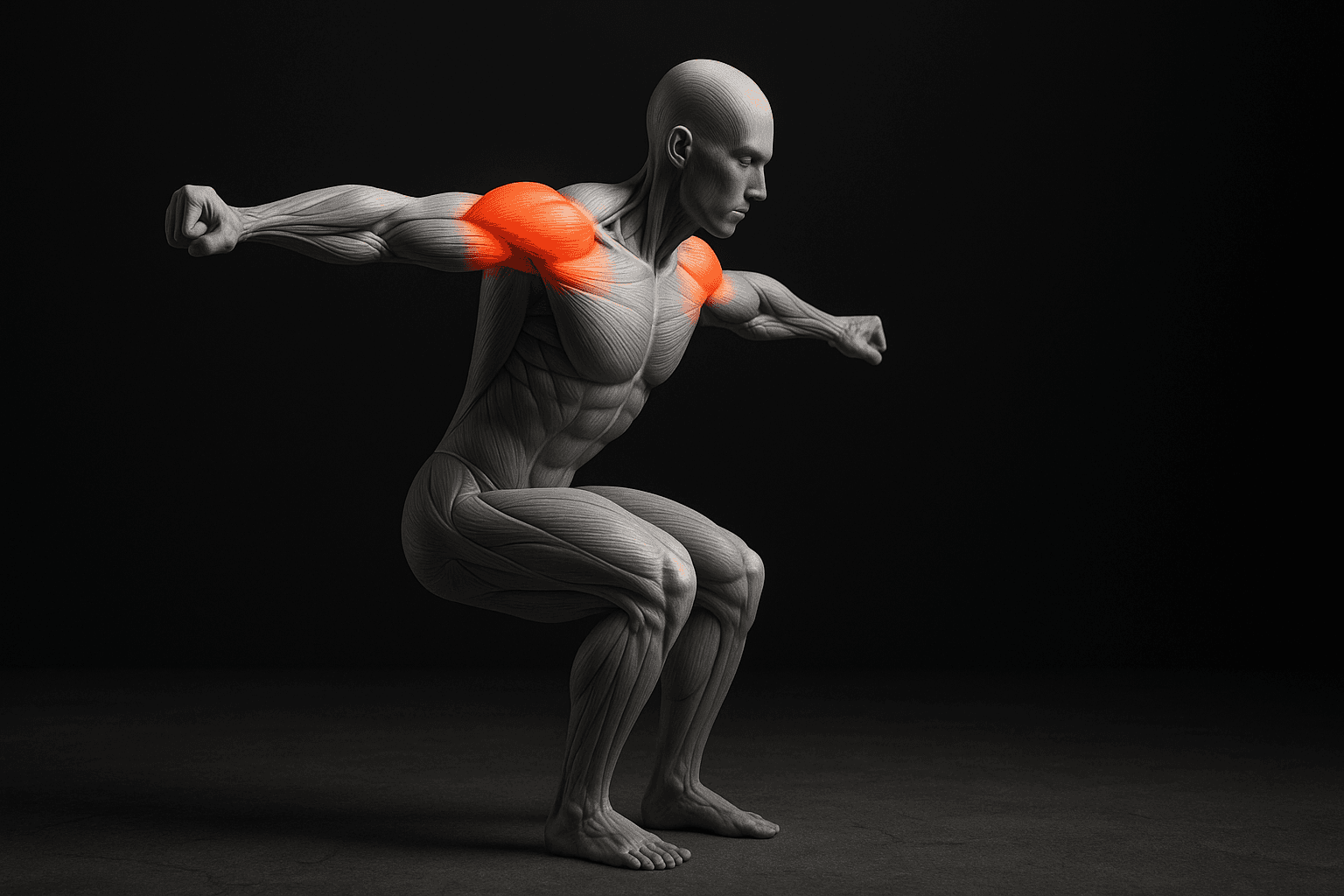
Photo by RepBro.
The rear delt fly proper form is a controlled shoulder horizontal-abduction movement performed with a neutral spine, a slight bend in the elbows, and no shoulder shrug—use a 2‑0‑2 tempo (2 s concentric, 0 s pause, 2 s eccentric), exhale on the lift, and stop if you feel sharp pain.
What is the correct starting setup for a rear delt fly?
- Position: choose either seated bent-over, standing bent-over, or chest-supported on an incline bench. For the standard bent-over dumbbell version, stand with feet hip-width, hinge at the hips until your torso is roughly parallel to the floor (within 0–20° of horizontal).
- Weight: start light—3–8 kg (7–18 lb) dumbbells for most beginners; use heavier only when strict form is preserved.
- Grip and elbow: hold dumbbells with a neutral grip (thumbs-up) or palms facing slightly down; keep a soft bend in the elbow of about 15–30° and lock that angle for the set.
- Spine and neck: maintain a neutral spine and a neutral neck (look ~1–3 m ahead on the floor). Brace your core to avoid rounding.
- Feet and knees: knees slightly bent (5–15°) to help balance; weight distributed midfoot.
How do I perform the rear delt fly step by step?
- Setup the hinge and hold the dumbbells with arms hanging under shoulders.
- Take a full breath in at the bottom position and brace your core.
- Exhale and raise the weights out to the sides in a wide arc, leading from the elbows, until your upper arms are roughly in line with your body (about 90° of shoulder horizontal abduction). Aim for the hands to end roughly in line with your shoulders—not dramatically higher.
- Keep the elbows slightly bent and fixed; avoid straightening or flexing the elbow during the lift.
- Pause briefly (0–1 s) at the top if you want more control, then inhale and lower the weights slowly back to the start over 2 seconds.
- Repeat for the target reps (8–15 for hypertrophy/skill, 15–25 for endurance or prehab work).
Tempo: use 2 seconds concentric (lifting), 0 seconds pause, 2 seconds eccentric (lowering). If you struggle to control the eccentric, lengthen it to 3–4 seconds.
Breathing: exhale during the concentric (effort) phase and inhale during the eccentric (return).
How do I know I’m targeting the rear delts and not the traps or lats?
- Cue horizontal abduction: imagine pulling your elbows straight out to the sides rather than pulling the dumbbells back toward the hips.
- Keep the shoulders packed (no shrug). If your shoulders rise, lower the weight and focus on downward rotation of the scapula before each rep.
- Stop the range when you feel the rear delt squeeze; if you feel the upper trap burn or your hands end higher than elbows, you’re likely using the traps.
What are the common mistakes and how do I fix them?
- Mistake: Using too much weight and swinging. Fix: Drop the load by 10–30% and slow the tempo to 2–0‑3. Tuck the chin and brace the core to eliminate momentum.
- Mistake: Shrugging the shoulders up (upper-trap dominance). Fix: Retract and depress the scapula slightly at the start of each rep; think "pull elbows wide, not shoulders up." Lighter weight helps.
- Mistake: Locking the elbows or turning it into a row. Fix: Maintain a 15–30° bend in the elbow and lead with the elbow tip to emphasize horizontal abduction rather than elbow extension.
- Mistake: Too large a range that involves the lats or external rotation stress. Fix: Stop when the upper arm reaches roughly parallel to the floor; rotate the hand slightly so the palm faces the floor only if it reduces shoulder discomfort.
- Mistake: Rounding the back. Fix: Hinge at the hips and brace the core; set a flat, neutral spine before each set and use a lighter weight if you can’t hold it.
When should I use variations like chest-supported or cable rear delt flys?
- Use chest-supported (on an incline bench) when you need to remove lower-back and hip-hinge demands—helpful for beginners or those with low-back fatigue.
- Use cables or bands to maintain continuous tension through the range and when you want to target the rear delt from a different line of pull.
- Compare variations and pick based on how they feel and whether you can maintain strict form: see variation comparisons at https://www.repbro.app/vs.
What about sets, reps, and programming?
- For strength and size: 3–4 sets of 8–15 reps with 60–90 s rest.
- For shoulder health and endurance: 2–3 sets of 15–25 reps with 30–60 s rest.
- Frequency: 2–3 times per week is sufficient for most people when included as part of a balanced upper-body program.
- Track progress: log the exercise and weights in your training app—RepBro is a simple way to record sets, reps, and tempo (https://apps.apple.com/us/app/gym-workout-coach-repbro/id6763749305).
What are the safety considerations?
Stop immediately if you experience sharp or radiating pain. This guide does not diagnose or treat injuries—consult a qualified healthcare or fitness professional if you have persistent pain, a history of shoulder problems, or post-surgical restrictions. Use conservative loads and prioritize scapular control.
One-sentence takeaway: Use a controlled hip hinge, slight elbow bend, 2‑0‑2 tempo, and light enough weight to avoid shrugging or swinging so the rear delts do the work.
Frequently asked questions
- How heavy should I go on rear delt flys?
- Choose a weight you can control for 8–15 reps with strict form. If you need momentum or shrug to complete reps, drop 10–30% and focus on technique.
- Should my thumbs point up or down?
- Both work; a neutral (thumbs-up) grip tends to reduce external rotation stress and is easier for many people. Rotate the hand slightly until the movement feels focused on the rear delts.
- Are machines better than dumbbells for rear delt work?
- Machines can help isolate the rear delts and reduce stabilization demands, but free weights (dumbbells/bands) offer more functional range and easier regression/progression. Compare options at https://www.repbro.app/vs.