Reverse Curl: Proper Form, Step by Step
Step-by-step reverse curl form guide: setup, execution cues, breathing, tempo, common mistakes and fixes, progression tips, and safety reminders for lifters.
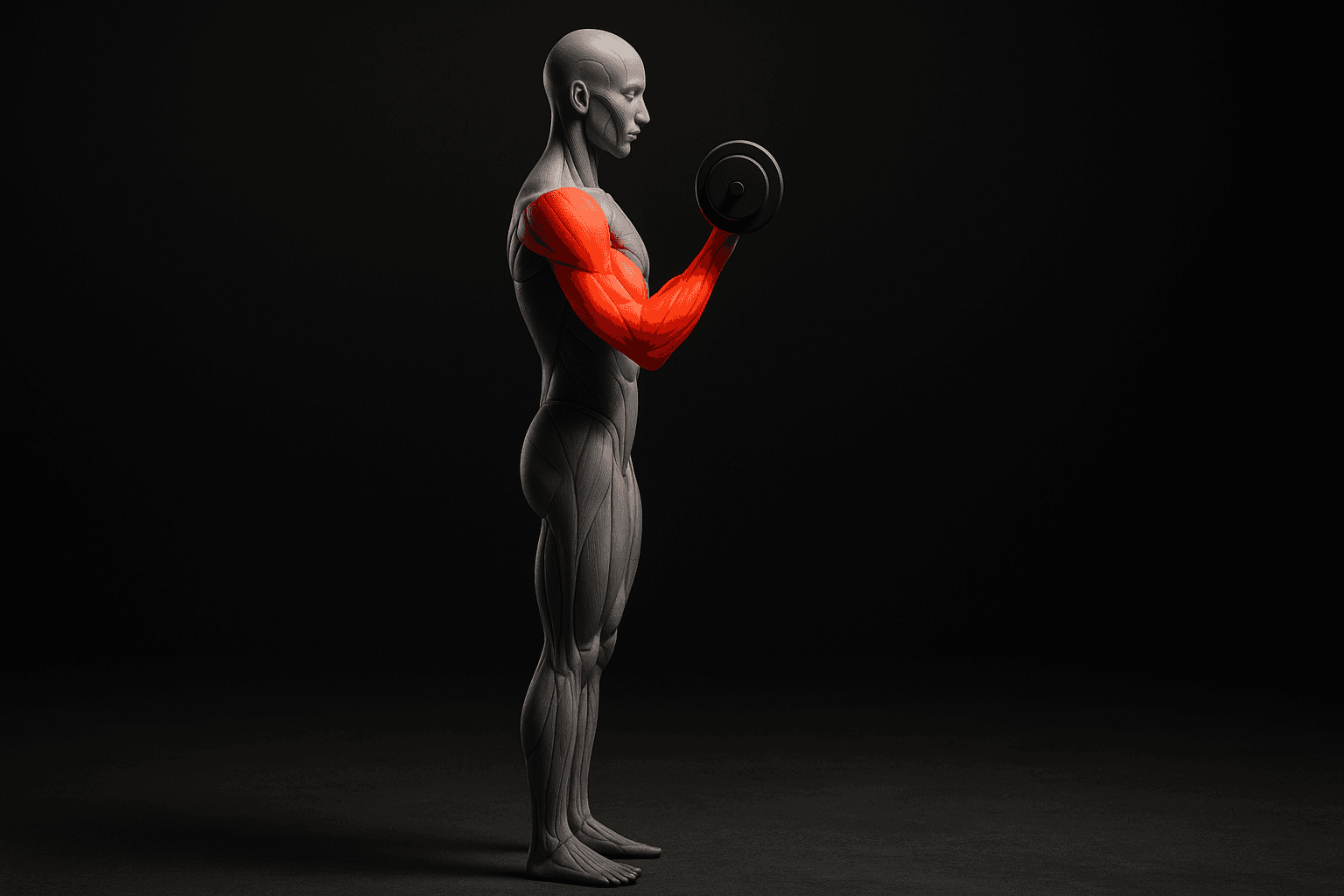
Photo by RepBro.
Reverse curl proper form: Stand tall, grip a barbell or EZ-bar with palms facing down (pronated), elbows fixed at your sides, and lift by flexing the elbows while keeping wrists neutral. Move deliberately—controlled concentric and eccentric phases—exhale on the lift, inhale lowering.
What is a reverse curl and what muscles does it target?
A reverse curl is an elbow-flexion exercise performed with a pronated (overhand) grip. It primarily targets the brachioradialis and the wrist extensors; the biceps brachii contributes less than in supinated curls. It’s useful for forearm thickness and for strengthening elbow flexion when grip rotation is limited.
How do I set up for a correct reverse curl (step-by-step)?
- Equipment: use a straight bar, EZ-bar for wrist comfort, or dumbbells for unilateral work. Stand with feet hip-width apart.
- Grip: take a shoulder-width pronated grip (palms down). For EZ-bar, choose the middle angled section most comfortable for your wrists.
- Starting position: arms fully extended, shoulders packed (scapulae slightly retracted), chest up, core braced. Wrists should be roughly in line with forearms—avoid excessive flexion.
- Weight choice: start light enough to maintain strict form for the prescribed reps; this exercise often requires less load than standard curls.
How should I execute each rep (cues and tempo)?
- Cue 1: Lead with the elbow, not the wrist. Think “elbow in pocket” as you curl.
- Cue 2: Keep elbows stationary at your sides; minimize shoulder movement.
- Cue 3: Keep wrists neutral—avoid letting them collapse into flexion at the top.
- Tempo: use a controlled tempo: 1–2 seconds concentric (lifting), 2–3 seconds eccentric (lowering). A common pattern is 1s up, 2s down. Slower eccentric control increases time under tension and technique.
- Breathing: exhale during the concentric (lifting) phase; inhale during the eccentric (lowering) phase.
- Range of motion: curl until forearm approaches biceps or until you hit a natural stopping point without wrist break. Lower fully to full elbow extension with control.
How many reps, sets, and how to progress?
- Reps: 6–15 per set is a reasonable range depending on your goal—lower reps with heavier loads for strength, higher reps for hypertrophy and endurance.
- Sets: 2–4 sets per session is common for targeted arm/forearm work.
- Frequency: 1–3 sessions per week for forearms/arms, ensuring at least 48 hours of recovery between intense sessions.
- Progression: increase load when you can complete the top of your rep target with perfect form for two sessions, or add a repetition or two; you can also slow the eccentric or add another set to increase volume.
How do reverse curls compare to other curl variations?
| Exercise | Grip | Primary emphasis |
|---|---|---|
| Reverse curl | Pronated (palms down) | Brachioradialis, wrist extensors |
| Hammer curl | Neutral (thumbs up) | Brachioradialis, brachialis, grip strength |
| Barbell curl (supinated) | Supinated (palms up) | Biceps brachii |
Use the table to choose a variation depending on whether you want more forearm emphasis (reverse) or biceps focus (supinated).
What are common mistakes and how do I fix them?
- Mistake: Wrists bend into flexion at the top. Fix: Lower the weight, cue wrist neutral, or use an EZ-bar. Grip strength sometimes forces wrist collapse—address with wrist/forearm strengthening.
- Mistake: Using momentum or swinging the torso. Fix: Brace core, slightly hinge from hips if needed (for strictness, stop the swing), or reduce weight.
- Mistake: Elbows drifting forward or flaring. Fix: Keep elbows pinned at sides and imagine driving the elbow toward the hip as you curl.
- Mistake: Too-heavy loading. Fix: Choose a weight that allows full controlled reps at the target tempo. Partial reps with control beat sloppy heavy reps.
- Mistake: Excessive range causing wrist pain. Fix: Stop a few degrees before wrist strain or try EZ-bar angles and assess comfort.
When should I avoid reverse curls or see a professional?
Stop the exercise if you feel sharp pain in the elbow, wrist, or forearm. If you have a history of elbow tendinopathy, recent wrist injury, or persistent joint pain, consult a qualified health professional (physiotherapist, sports doctor) before continuing. Never rely on online advice alone to diagnose or treat pain.
What safety cues should I follow while training?
- Warm up with light sets and wrist/forearm mobility first.
- Maintain neutral neck and spine alignment; brace core to avoid momentum.
- Exhale on the lift; inhale on the lowering. Breathe consistently—don’t hold breath for entire set.
- If you experience sharp or radiating pain, stop and seek a professional evaluation.
What are realistic expectations for progress?
Reverse curls can increase forearm size and grip-related strength over weeks to months when performed consistently and paired with progressive overload and adequate recovery. Forearm growth responds to volume and mechanical tension; results depend on nutrition, genetics, and overall program consistency.
Limitations: What can apps and guides not do for you?
No app or online guide can see your exact movement, sense pain, or diagnose injuries. Automated programs can’t replace a hands-on coach or clinician who can assess joint angles, soft-tissue issues, and movement compensations. A training plan only works when you consistently apply it and adjust based on real-world feedback.
Safety reminder: stop on sharp pain and consult a qualified professional for persistent issues. This article is instructional; it’s not medical advice.
If you want guided programming that tracks volume and progression for arm work, consider adding structured sessions to your routine and logging results consistently to inform gradual, evidence-aligned progression.
Frequently asked questions
- Can reverse curls build forearms as effectively as hammer curls?
- Reverse curls emphasize the brachioradialis and the forearm extensors by using a pronated grip; they complement hammer curls, which emphasize the brachioradialis and brachialis with a neutral grip. Use both in rotation for balanced forearm development rather than expecting one to fully replace the other.
- How often should I include reverse curls in my program?
- Include reverse curls 1–3 times per week depending on total arm and forearm volume; aim for 6–12 hard sets per week across sessions for arms combined. Adjust based on recovery, soreness, and how they fit into your overall program.
- Do reverse curls hurt the wrists and how can I prevent pain?
- Some lifters feel wrist strain from the pronated grip or excessive load. Use lighter weight, maintain neutral wrist alignment (avoid excessive flexion), shorten range briefly, or use an EZ-bar. Stop on sharp pain and consult a professional if discomfort persists.