Reverse Pec Deck: Proper Form, Step by Step
Clear, evidence-aware guide to reverse pec deck form: setup, execution cues, breathing, tempo, common mistakes and fixes, plus safety and limitations.
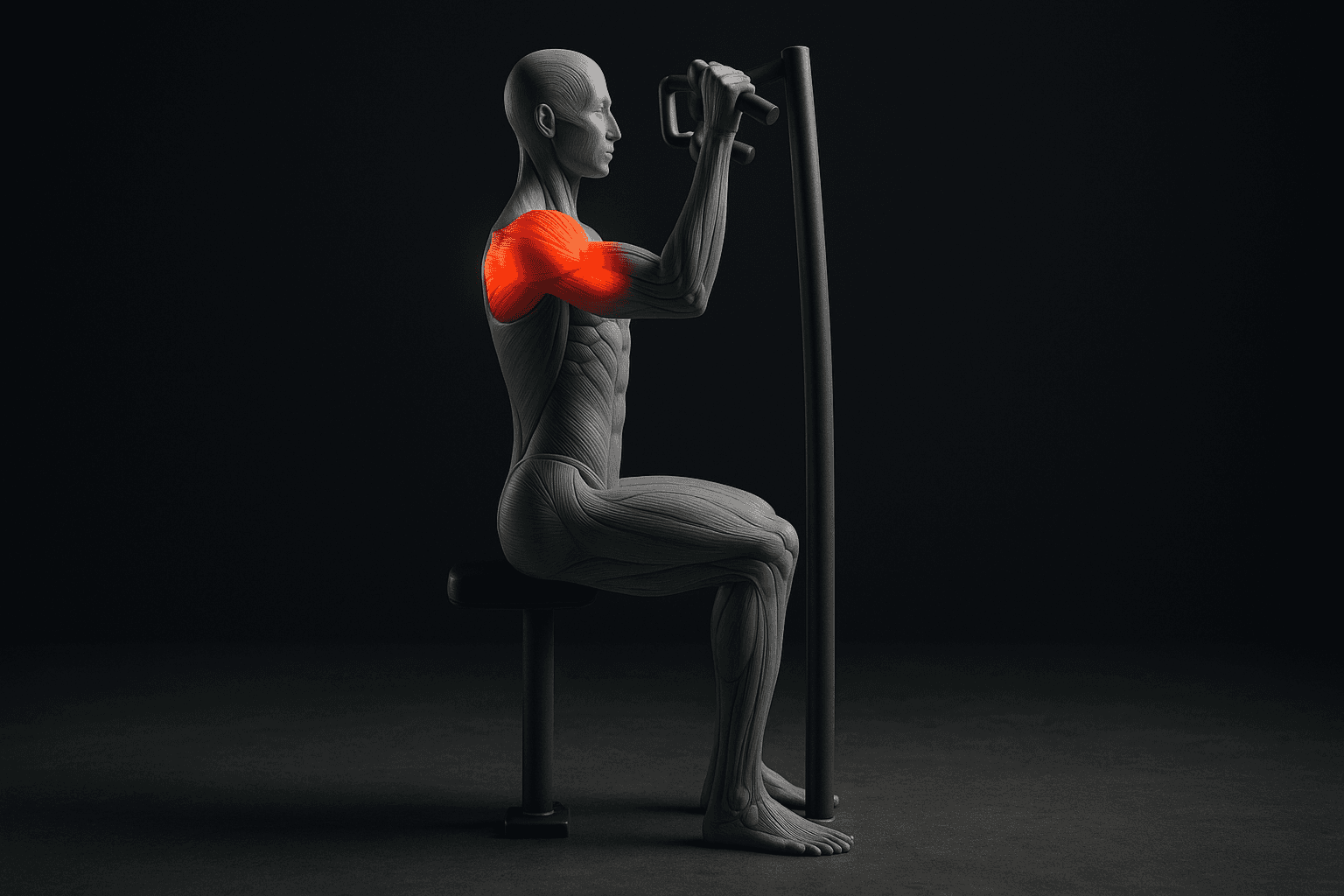
Photo by RepBro.
Direct answer (40–60 words):
The reverse pec deck trains the posterior deltoids and upper back when set and executed correctly. Set the seat so your shoulder joint aligns with the axis, use a controlled tempo, keep a neutral spine and scapula stability, and breathe out on the concentric. Stop on sharp pain and consult a professional.
How do I set up the reverse pec deck properly?
- Seat height: sit so your armpit/shoulder joint lines up with the machine’s pivot. Your upper arm should be roughly parallel to the floor at the start. If your arms sit above or below that plane, adjust the seat.
- Pad/arm position: some machines have handles or pads. Grasp the handles or rest your elbows against pads with elbows slightly bent (10–20°). Avoid locking the elbow.
- Chest and feet: press your chest gently against the chest pad (if available) or maintain an upright posture; plant your feet flat and neutral for stability.
- Scapula set: lightly retract your shoulder blades at the start—enough to create tension but not a maximal squeeze. This creates a stable base for the posterior deltoid to work.
What is the step-by-step execution and the best cues?
- Start: hands or elbows at the start position, torso upright, scapula mildly retracted, chin neutral.
- Initiate the movement from the shoulder: think "pull the elbows back" rather than "pull the hands." This bias keeps tension on the rear delts and upper back.
- Concentric (closing the arc): move the arms horizontally back until your hands/elbows are roughly in line with or slightly behind your torso. Avoid excessive horizontal extension that tips into shrugging or lumbar extension.
- Finish: hold the end position for 0–1 second, emphasizing a short posterior deltoid contraction.
- Eccentric (return): control the weight back to the start; do not allow the arms to slam forward or let the scapula protract quickly.
- Repetition cue summary: lead with the elbows, keep the neck neutral, maintain scapular control, and avoid using momentum.
What tempo and breathing should I use?
- Tempo: use roughly a 1–2 second concentric, 0–1 second pause, and 2–3 second eccentric. A common controlled tempo is 2:0:3 (concentric:pause:eccentric). Slower eccentrics increase time under tension and control.
- Breathing: inhale on the eccentric (return) and exhale during the concentric (pulling back). Maintain steady breathing; do not hold your breath unless performing a deliberate Valsalva under coach guidance.
How many sets, reps, and how often should I train the reverse pec deck?
- Reps: 6–20 per set covers strength to hypertrophy ranges. For most hypertrophy-focused work, aim for 8–15 reps.
- Sets: 2–5 working sets per session is typical depending on overall program volume.
- Frequency: 2–3 sessions per week for posterior delts aligns with standard hypertrophy frequency recommendations. Adjust volume across the week so total weekly sets match your program goals.
- Progression: increase reps or load gradually. If you can perform the top of your rep range for all sets with perfect form, increase load by the smallest available increment.
How does the reverse pec deck compare to other rear-delt exercises?
| Exercise | Main benefit | Notes |
|---|---|---|
| Reverse pec deck | Controlled, machine-guided posterior delt isolation | Good for beginners or targeting rear delts without load on lower back |
| Bent-over dumbbell reverse fly | Core and stabilizer demand, free-range motion | Requires more trunk stability and can allow broader ROM |
| Cable reverse fly | Adjustable angles, constant tension | Allows single-arm work and varied lines of pull |
What are common mistakes and how do I fix them?
-
Mistake: using too much weight and shrugging with traps. Fix: lower the load, cue "lead with the elbows" and focus on scapula control.
-
Mistake: leaning backward or extending the lower back to gain range. Fix: brace the core, keep the chest against the pad (if present), or use a lighter weight and shorter range.
-
Mistake: letting the hands/humerus drop below horizontal and relying on momentum. Fix: slow the eccentric, keep a small elbow bend, and stop each rep before momentum takes over.
-
Mistake: forearms pulling more than upper arms, turning it into a biceps-dominant move. Fix: use handles or pads and emphasize moving the upper arm back; make the cue "pull the elbows back to the wall behind you."
What safety guidance should I follow?
Stop immediately if you feel sharp or radiating pain. If a shoulder or neck issue arises, consult a qualified clinician before continuing. Never force a range of motion that feels uncomfortable; machine settings and weight should allow controlled, pain-free motion.
What limitations should I expect from a machine-only approach?
- Machines guide plane of motion and reduce stabilizer demand; they do not train core stability the same way free weights do.
- No app or video can fully assess subtle form errors; in-person coaching or video feedback from a qualified coach is superior for exact correction.
- If you have a past shoulder injury, individualized assessment by a clinician or physiotherapist is necessary before programming.
Limitations (mandatory):
Apps and AI cannot replace in-person assessment for persistent pain, structural injury, or rehab. They can’t see your movement in real time or feel joint loading. A program only helps if you follow it consistently; consistency and gradual progression matter more than tool choice.
Final notes
Use the reverse pec deck as a reliable tool to isolate the posterior deltoids within a balanced upper-body program. Prioritize setup, scapular control, tempo, and incremental progression. If you need targeted coaching for pain or rehab, consult a qualified health or strength professional—do not self-diagnose.
Safety reminder: stop on sharp pain; consult a qualified professional; this article is educational and not medical advice.
Frequently asked questions
- Will the reverse pec deck build my rear delts?
- Yes. When done with strict form the reverse pec deck targets the posterior deltoid and upper back musculature. Use moderate loads, 6–20 reps, and 2–3 weekly sessions for growth. Volume and progressive overload matter more than the specific machine choice.
- How heavy should I set the machine?
- Choose a weight that allows controlled reps with good form: the last 2–3 reps of a set should feel challenging but achievable. If you lose the shape of the movement or recruit the traps and lower back excessively, reduce the load.
- Can the reverse pec deck hurt my shoulders?
- It can if you use excessive weight, poor setup, or push through sharp pain. Stop on sharp pain and consult a qualified professional. For most people the machine is shoulder-friendly if range of motion is comfortable and scapular control is maintained.