The Most Common Romanian Deadlift Mistakes (and How to Fix Them)
Fix the 6 most common Romanian deadlift (RDL) mistakes—why they happen, what they cost, and one concrete fix for each to improve strength and safety.
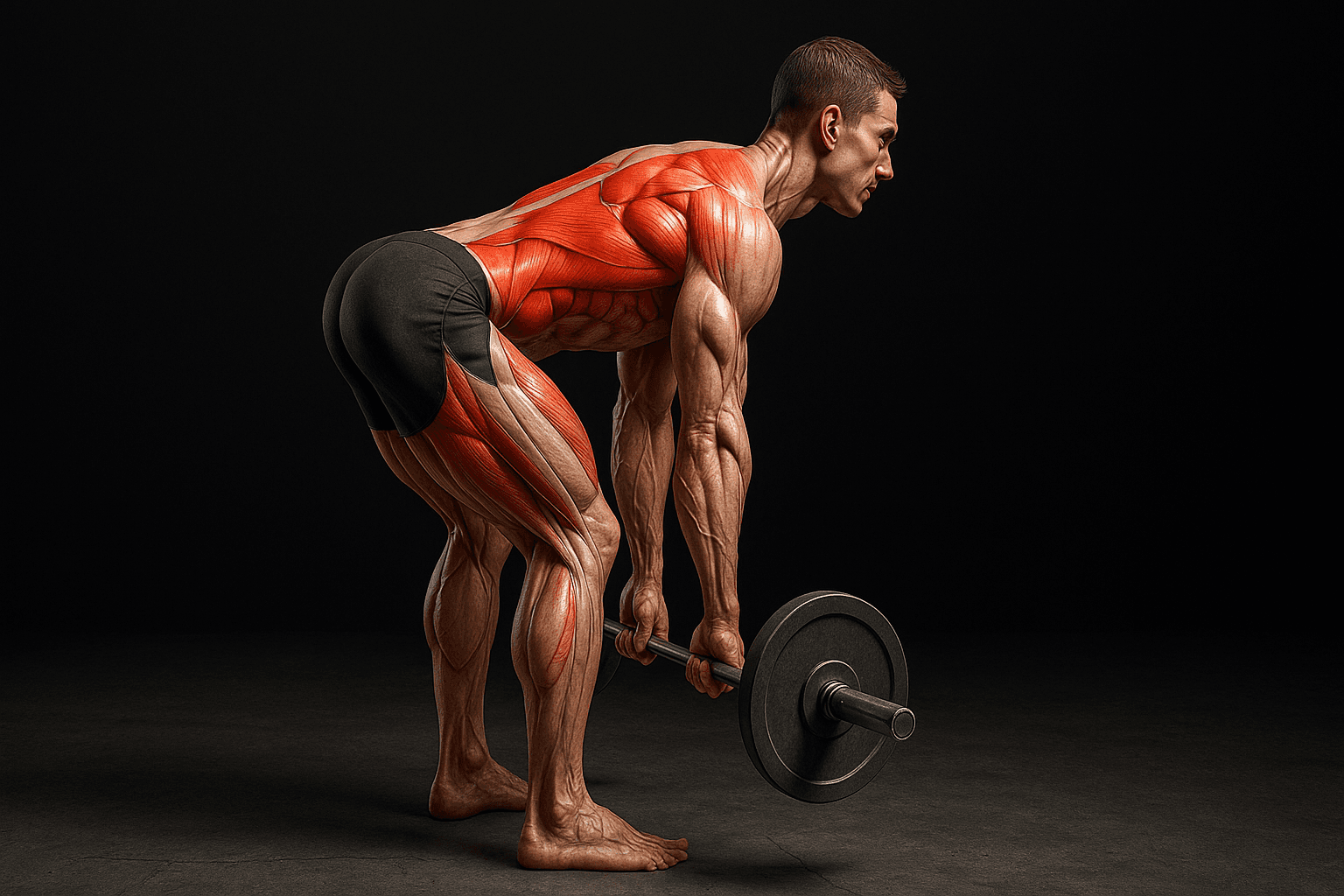
Photo by RepBro.
The most common Romanian deadlift mistakes are: rounding the lower back, letting the bar drift away from the legs, turning the RDL into a squat (excess knee bend), hinging from the low back instead of the hips, hyperextending the spine at the top, and using too much load too soon. Fix each with a clear cue or drill and you’ll keep tension where you want it—on the hamstrings and glutes—while cutting injury risk and lost gains.
Why does my lower back round during Romanian deadlifts?
Why it happens: Limited hip hinge practice, tight hamstrings, or too-heavy loads lead people to reach with the lower back as the bar descends. Rounding feels like an easy way to reach depth when the hips can’t move back far enough.
What it costs: Loss of targeted posterior-chain tension and increased shear or compressive loading on the lumbar spine—this reduces transfer to strength gains and raises injury risk.
One concrete fix: Use the dowel test—place a broomstick or PVC along your back contacting your head, upper back, and sacrum; hinge back keeping all three contact points. Do 3 sets of 8 slow reps with just the dowel, then repeat with an empty bar until you can hinge without losing contact.
Why does the bar drift away from my legs?
Why it happens: Letting the bar float away usually comes from poor setup or trying to keep the torso more upright (squatting the weight). It also happens when shoulders round forward or the hips don’t travel back.
What it costs: Increased moment arm (torque) and spinal loading, less hamstring stretch, and reduced mechanical advantage—so you lift less effectively and fatigue sooner.
One concrete fix: Keep the bar within 2–5 cm (1–2 in) of your legs throughout the reps. Cue “bar on the shins” and practice slow single reps where you push hips back until the bar grazes the thigh before returning with the bar sliding up the legs.
Why do I end up bending my knees too much (turning RDL into a squat)?
Why it happens: Confusion about movement pattern or trying to use quads to move heavy weight. Also common when shoes or platform feel unstable—people default to knee-dominant movement.
What it costs: Less hamstring and glute activation, more quad dominance, and a reduced carryover to hip-hinge strength.
One concrete fix: Set your legs with a fixed micro-bend (knee angle around 10–20 degrees) and mark it—stand, bend knees, note feel, and don’t let knee angle change during the set. Tape a small mark on the floor or use a mirror to check. Start with lighter loads and 3 sets of 6–10 focused reps.
Why do I hinge from my low back instead of my hips?
Why it happens: Inadequate glute and hamstring activation or motor control, combined with tight hip flexors. The body finds the easiest lever—spinal flexion—to get the bar down.
What it costs: Reduced posterior chain development and higher spinal strain, particularly in the lumbar region.
One concrete fix: Pre-activate glutes with 2 sets of 12 glute bridges, then perform RDLs immediately after (contrast sets). On the RDL, cue “push hips back 20–30 cm (8–12 in)” rather than “bend forward.” Use a lighter load (50–60% of your usual working weight) for 3–4 sets of 6–8 reps while focusing on hip travel.
Why do I hyperextend at the top?
Why it happens: People often think full extension means leaning back; this turns a neutral finish into lumbar hyperextension. Ego lifting and trying to show off lockout are common causes.
What it costs: Compressive stress on the posterior elements of the spine and reduced tension through the hamstrings and glutes at the top—translation to strength is poorer and injury risk rises.
One concrete fix: Finish with a neutral pelvis—stand tall but don’t lean back. Practice finishing each rep by squeezing glutes and holding neutral alignment for 1 second. Use a light band around the knees or a wall behind you to avoid pushing the hips forward into hyperextension.
Why am I using too much load too soon?
Why it happens: The RDL looks like a deadlift and people assume they can match their conventional numbers. Also, RDL form decays faster under heavy load.
What it costs: Bad movement patterns get reinforced, increasing injury risk and limiting long-term strength gains because you’re not teaching the correct hinge under load.
One concrete fix: Use an auto-regulated progression: start RDLs at 40–60% of your conventional deadlift for technique-focus weeks. Track form quality—if form breaks on rep 6 of 8, drop 10% weight next session. Do technique sets (3–5 sets of 4–8 reps) before adding load.
What safety precautions should I take?
Stop on sharp pain and consult a qualified professional if pain persists. Avoid trying to "beat" a bad rep—quality over quantity. Keep warm, use controlled tempo (1–2 s down, 1 s pause at stretch, 1 s up), and regress to lighter loads or rehearsals with a dowel/barbell if your form slips.
If you want help tracking cues, tempo, or loading progression, use RepBro to log form notes and plan progressive overload safely.
Honest takeaway: Fix the hinge, keep the bar close, and progress slowly—quality reps build stronger hamstrings and safer backs over time.
Frequently asked questions
- How deep should I go on a Romanian deadlift?
- Stop when you feel a strong stretch in the hamstrings or when the bar reaches just below the knees or mid-shin for your mobility—usually 10–30 cm (4–12 in) below the knee; maintain a neutral spine.
- Should I keep the knees locked during RDLs?
- No. Keep a slight, fixed knee bend—about 10–20 degrees—to take tension off the patella and allow a true hip hinge; avoid actively bending the knees to turn the movement into a squat.
- Are RDLs safer than conventional deadlifts?
- RDLs emphasize the hip hinge and hamstrings and can be lower-risk when performed with strict form and lighter loads; safety depends on technique, load management, and individual mobility.