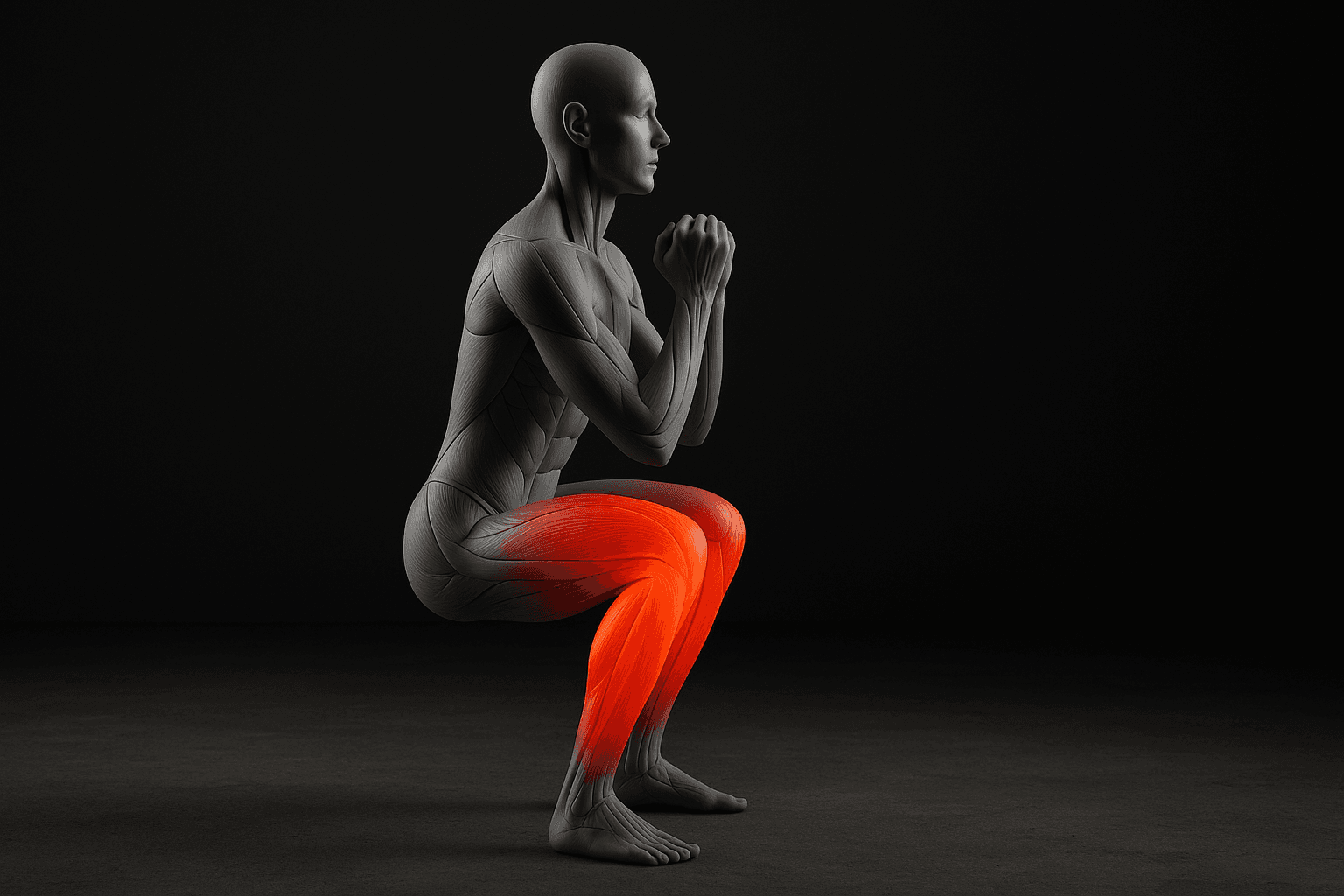
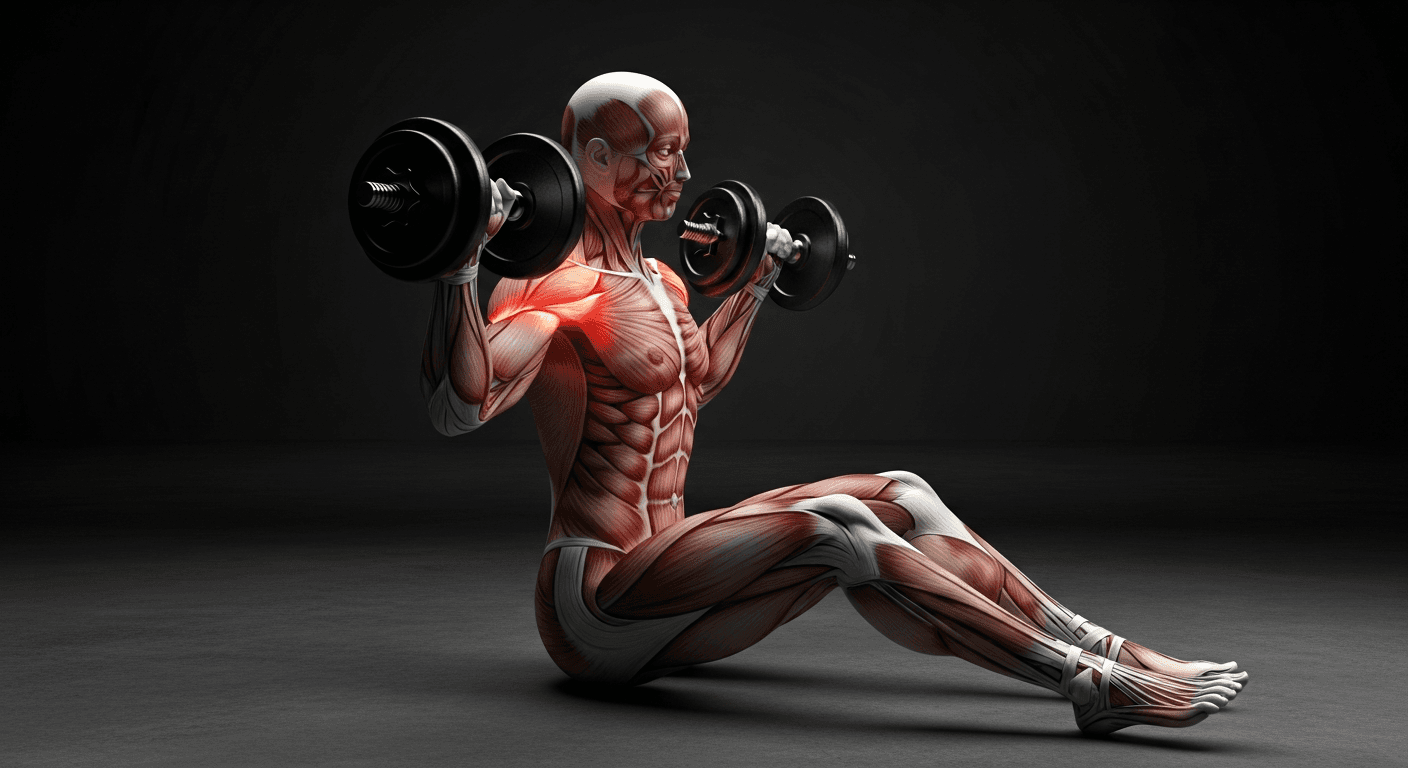
Step-up: Proper Form, Step by Step
Clear, evidence-aware guide to step-up form: setup, cues, tempo, breathing, programming, common mistakes and fixes. Safety-first; consult a professional for pain.

Photo by RepBro.
The proper step-up uses a stable box or bench at hip to knee height, driving through the heel of the front foot while keeping your torso upright, using minimal help from the trail leg, and lowering with control. Breathe intentionally and progress load slowly; stop on sharp pain.
What is the correct setup for a step-up?
- Choose a stable surface: a box, bench, or platform rated for your weight. Surface height: aim for a box that brings your front thigh near parallel to floor at lockout — commonly between 20–40 cm (8–16 in) depending on your leg length.
- Foot placement: place the whole foot on the top of the box, not just the toes. Position the foot slightly off-center (about mid-foot over the edge) so your knee tracks over toes.
- Stance: stand facing the box with feet hip-width apart. Keep shoulders stacked over hips and chest tall.
- Load choice: start bodyweight to nail mechanics, then add dumbbells, a kettlebell, or a barbell once you can perform controlled repetitions.
How should I perform the step-up, step by step?
- Starting position: stand close to the box so your front foot can place fully on it without reaching. Grip dumbbells at your sides or hold a kettlebell in the goblet position if loaded.
- Step placement: place the entire front foot on the box, toes roughly pointing forward. Keep the trailing foot on the floor.
- Drive to stand: press through the heel of the front foot, extend the hip and knee to raise your body until the front leg is straight. The trail foot can lightly tap the box at the top but should not be driving the movement.
- Top position: stand tall with hips extended and spine neutral. Avoid excessive leaning backward or rotating the pelvis.
- Controlled descent: lower yourself by flexing the hip and knee of the front leg, returning the trailing foot to the floor under control. Don’t drop — use tempo.
- Reset and repeat on the same leg for the programmed reps, then switch. Alternate legs between sets if preferred.
Execution cues: keep your chest up, imagine screwing the front foot into the box, push the floor away rather than pulling yourself up with the trailing leg, and maintain a soft knee on landing of the trail foot.
What tempo and breathing should I use when doing step-ups?
- Tempo example (practical): 1:0:1–2:0 — 1 second drive up, no pause, 1–2 seconds controlled descent, no extra pause at bottom. Slower tempos increase time under tension for hypertrophy.
- Breathing: inhale before you step up, brace your core, exhale as you drive to the top. For heavy sets, use a braced inhale (Valsalva briefly) under coach guidance to maintain spinal stiffness; exhale at lockout.
How should I program step-ups for strength and hypertrophy?
- Strength focus: heavier loads, lower reps (e.g., 3–6 reps per leg), multiple sets. Use longer rest and prioritize technical quality.
- Hypertrophy focus: moderate loads, 6–12 reps per leg, 2–5 sets. Increase time under tension with controlled tempo.
- Frequency: include step-ups 1–3 times per week depending on total lower-body volume and recovery. Ensure you balance unilateral work with bilateral lifts.
- Progression: increase reps, then load, then box height as long as form is preserved. Track RPE or bar speed to guide progression rather than purely weight increases.
These programming recommendations align with general resistance-training consensus: adjust volume and intensity to recovery, use progressive overload, and prioritize form.
What are common step-up mistakes and how do I fix them?
- Mistake: pushing off with the trail leg. Fix: reduce box height or load, consciously drive through the heel of the front foot. Practice single-leg box stands to strengthen hip extension.
- Mistake: leaning too far forward or rounding the back. Fix: keep chest up, retract shoulders, and engage the core. Use a lighter load until torso control improves.
- Mistake: letting the knee cave (valgus). Fix: focus on knee tracking over the second toe; strengthen glute medius with banded lateral walks or clamshells.
- Mistake: using only the toes of the front foot. Fix: place full foot, cue heel-drive, and imagine pushing the box away.
- Mistake: dropping quickly on descent. Fix: control the eccentric (2 seconds) to build strength and reduce joint stress.
How does the step-up compare to lunges and split squats?
| Exercise | Primary emphasis | Balance demand | Loading options | Typical rep range |
|---|---|---|---|---|
| Step-up | Hip and knee extension, powerful concentric drive | Moderate | Dumbbells, kettlebell, barbell | 3–12 per leg |
| Split squat | Constant tension, stability | Lower than step-up | Dumbbells, barbell | 6–12 per leg |
| Lunge | Large range of motion, dynamic balance | High | Dumbbells, barbells | 6–12 per leg |
Choose step-ups when you want unilateral strength carryover with an emphasis on a strong concentric drive and simpler setup for heavier loads.
What safety advice should I follow?
- Stop if you feel sharp pain. If discomfort persists, consult a qualified healthcare or movement professional; do not self-diagnose.
- Use conservative load progression and prioritize full-foot contact and torso control.
- If you have knee, hip, or balance issues, test bodyweight step-ups or work with a clinician before loading heavily.
What are the limitations of this guidance?
No app or article can watch your form in real time or diagnose injuries. A remote program can’t replace hands-on assessment from a qualified coach or clinician for pain, instability, or rehabilitation. Consistency and individual tweaking matter more than tool choice. If you have a history of joint problems or recent injury, consult a professional.
Safety note: this guide is educational. If you experience sharp or unusual pain, stop and seek professional assessment.
If you want simple tracking for sets, weights, and progression, consider logging your step-ups with a training app such as RepBro, or record short videos to review with a coach.
References and further reading: consult standard resistance-training texts and position statements from sports science organizations for detailed programming guidelines and sets-per-week recommendations.
Frequently asked questions
- How high should the box be for step-ups?
- Use a box height that places your front thigh roughly parallel to the floor at the top—typically hip to knee height depending on limb length. Too high increases knee and hip stress; too low reduces challenge. Choose a height that lets you drive through the heel with a controlled motion.
- Should my whole foot be on the box during a step-up?
- Yes: place the entire forefoot and heel on the step so pressure is distributed and you can drive through the heel. Partial contact shifts load to toes and increases imbalance. Full-foot contact improves force transfer and reduces compensatory movement from the trail leg.
- How often should I program step-ups?
- Program step-ups 1–3 times per week depending on goals and overall leg volume. Use lower reps with heavier load for strength and moderate reps for hypertrophy. Monitor fatigue; adjust sets and load if form degrades. Consult a coach for individual planning if you have a injury history.