Sumo Deadlift: Proper Form, Step by Step
Clear, safety-first sumo deadlift form guide: stance, setup, breathing, tempo, common mistakes and fixes to lift safely and efficiently.
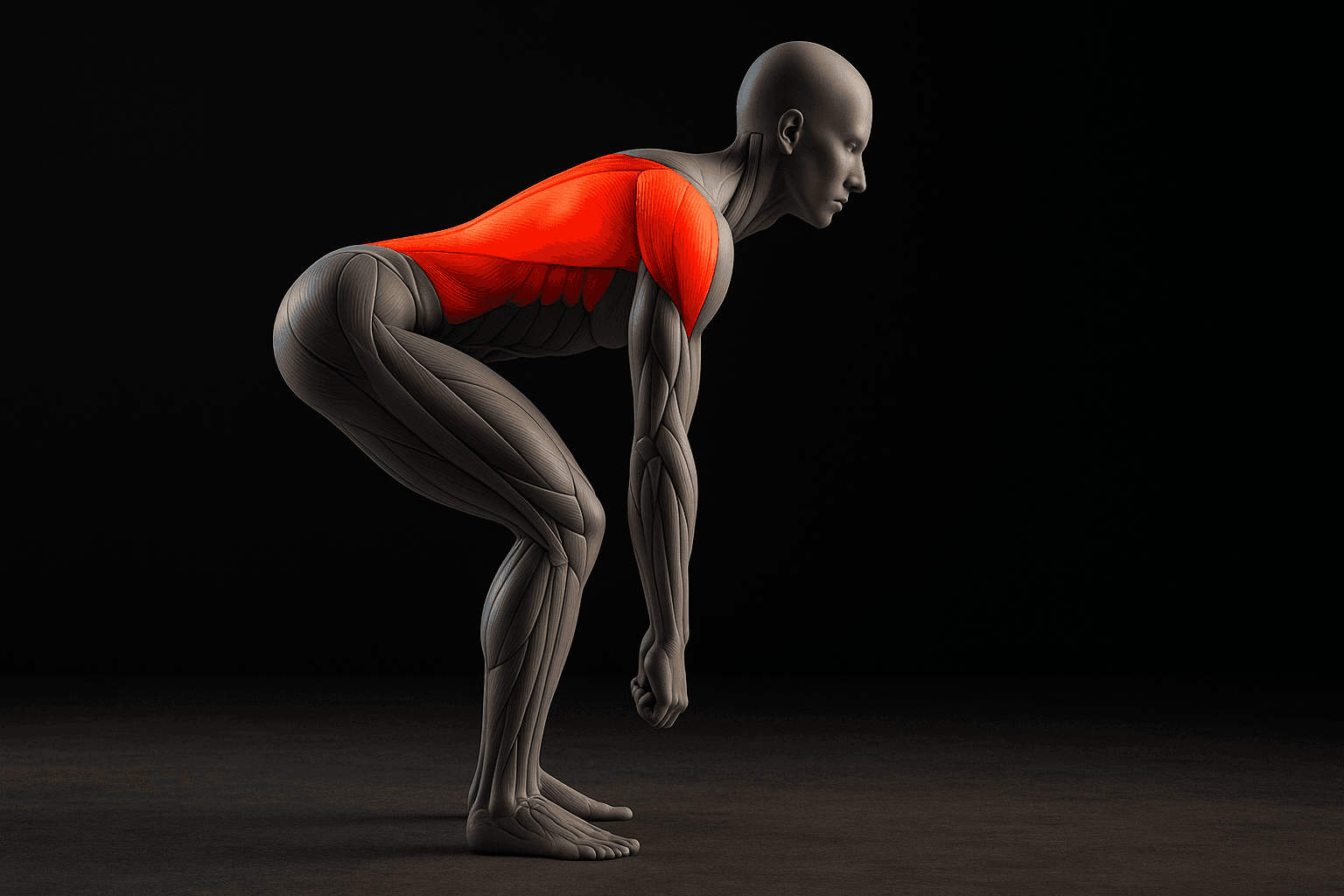
Photo by RepBro.
The proper sumo deadlift uses a wide stance, hands inside the knees, a neutral spine, and a coordinated hip-and-knee extension so the bar moves in a near-vertical path from mid-foot to lockout. Set your feet roughly 1.5 times shoulder-width, toes 15–30° out, grip the bar with hands inside the knees, brace with a full diaphragmatic breath, then drive through the feet by extending hips and knees together while keeping the chest up and the back flat.
?How do I set up for a correct sumo deadlift?
- Bar and foot placement: stand with the bar over mid-foot. Take a wide stance: feet about 1.5 times shoulder-width apart (adjust within that range until shins are nearly vertical). Turn toes out 15–30°.
- Grip and hand position: reach down and grip with hands inside the knees. Hands should be roughly shoulder-width apart or slightly narrower. Use a double overhand, hook grip, or mixed grip as needed for heavier sets.
- Hip and trunk position: lower your hips so that your thighs are angled but not vertical. Hips will start lower than in a conventional deadlift. Keep the chest up and shoulders slightly in front of the bar.
- Set the back: retract the shoulder blades, pull the lats down and back as if pinning your armpits closed, and maintain a neutral spine from head to tailbone.
- Brace your core: take a full diaphragmatic breath into the belly and ribcage, then brace the trunk hard as if preparing for a punch. This is your internal support for the lift.
?What are the execution cues during the pull?
- "Pull slack": gently lift the bar 1–2 cm to take up any play in the setup without changing your hip height. This cues tension.
- "Drive the floor away": initiate the lift by pressing your feet into the floor, extending the knees and hips together rather than lifting the hips first.
- "Knees out": push the knees out toward your toes to keep them tracking over the feet and to open the hips; imagine trying to spread the floor with your feet.
- "Chest up, eyes neutral": keep the chest proud, neck neutral, and eyes on a spot 2–3 m ahead rather than looking up.
- "Finish with the hips": extend fully at the hips to stand tall, squeezing the glutes at lockout. Do not hyperextend the lumbar spine; stand tall rather than leaning back.
?What breathing and tempo should I use?
- Breathing: before the pull take a deep diaphragmatic inhale, brace the core, hold that brace through the pull (Valsalva is an advanced technique and often used briefly on heavy sets). Exhale after you have passed the most strenuous portion or at lockout when safe.
- Setup tempo: spend 2–5 seconds getting into position and the breath/brace.
- Concentric tempo (lifting): explosive intent — aim to move the bar as fast as possible while maintaining technique; typical time 0.3–1.0 seconds on submaximal lifts, slightly longer under maximal loads.
- Eccentric tempo (lowering): control the descent in 2–3 seconds. Hinge at the hips first and allow the knees to bend after the bar passes them. Lowering with control reduces risk and improves motor control.
?What common mistakes do lifters make, and how do you fix them?
- Rounded back: often from setting hips too high, poor bracing, or loading too heavy. Fix: lower the hips slightly, brace the core, reduce load, and pull slack before initiating the lift.
- Hips shooting up early: this turns the lift into a stiff-leg movement and loads the lower back. Fix: start with a slightly lower hip position and cue "extend knees and hips together." Practise paused deadlifts from the floor.
- Knees caving inward: weak glute medius or poor setup. Fix: actively push knees out toward toes, cue "spread the floor," and strengthen with banded lateral walks and sumo squats.
- Bar drifting away from shins: increases shear and lever arm. Fix: keep the bar close, start with the bar over mid-foot, and maintain tension in the lats so the bar tracks vertically.
- Looking up or hyperextending at lockout: can strain the neck and lower back. Fix: keep a neutral neck and finish tall with glutes engaged; avoid leaning back.
?When should I choose sumo over conventional?
Choose sumo if you have relatively longer legs, better hip mobility for a wider stance, or if you want to reduce hip hinge range and back shear. If you need help deciding, see a comparison of styles at https://www.repbro.app/vs or track both styles in your program using RepBro.
?What are the safety considerations?
Stop immediately and consult a qualified professional if you feel sharp or unusual pain. Follow progressive overload: increase weight no more than 2–5% for upper-body or lower-body lifts per week depending on experience. Use proper footwear with a flat, firm sole. If you have a history of spine or hip issues, get clearance and technique coaching from a physiotherapist or qualified coach. This guide does not diagnose injuries.
?How can I practise and progress safely?
- Start light and nail the pattern: practise with an empty barbell or kettlebell for sets of 5–8 focusing on setup, bracing and the hip-knee coordination.
- Use accessory work: paused sumo deadlifts, deficit sumo pulls, and hip-dominant movements like glute bridges to strengthen weak points.
- Track tempo and RPE: keep technique perfect at RPE 7–8 and save maximal attempts for when form is consistent.
One-sentence takeaway: The sumo deadlift is a technical, hip-driven lift you perform safely by setting a wide stance, keeping the bar over mid-foot, bracing the core, extending hips and knees together, and lowering with control.
Frequently asked questions
- Is sumo deadlift safer for the lower back than conventional?
- Sumo typically reduces hip hinge range and spinal shear compared with conventional for some people, but safety depends on technique, mobility and load—stop on sharp pain and consult a professional.
- How wide should my sumo stance be?
- Start with feet roughly 1.5 times shoulder-width apart and adjust until your shins are near-vertical and you can keep a flat back; toes turned 15–30 degrees outward works for most lifters.
- Should I use a mixed grip or hook grip?
- Use a hook grip or double overhand for lighter loads and switch to a mixed grip or lifting straps for heavy sets once you can maintain technique and safety.