The Most Common Sumo Deadlift Mistakes (and How to Fix Them)
Identify the 6 most common sumo deadlift mistakes, why they happen, what they cost (gains or injury risk), and one concrete fix for each to improve strength and safety.
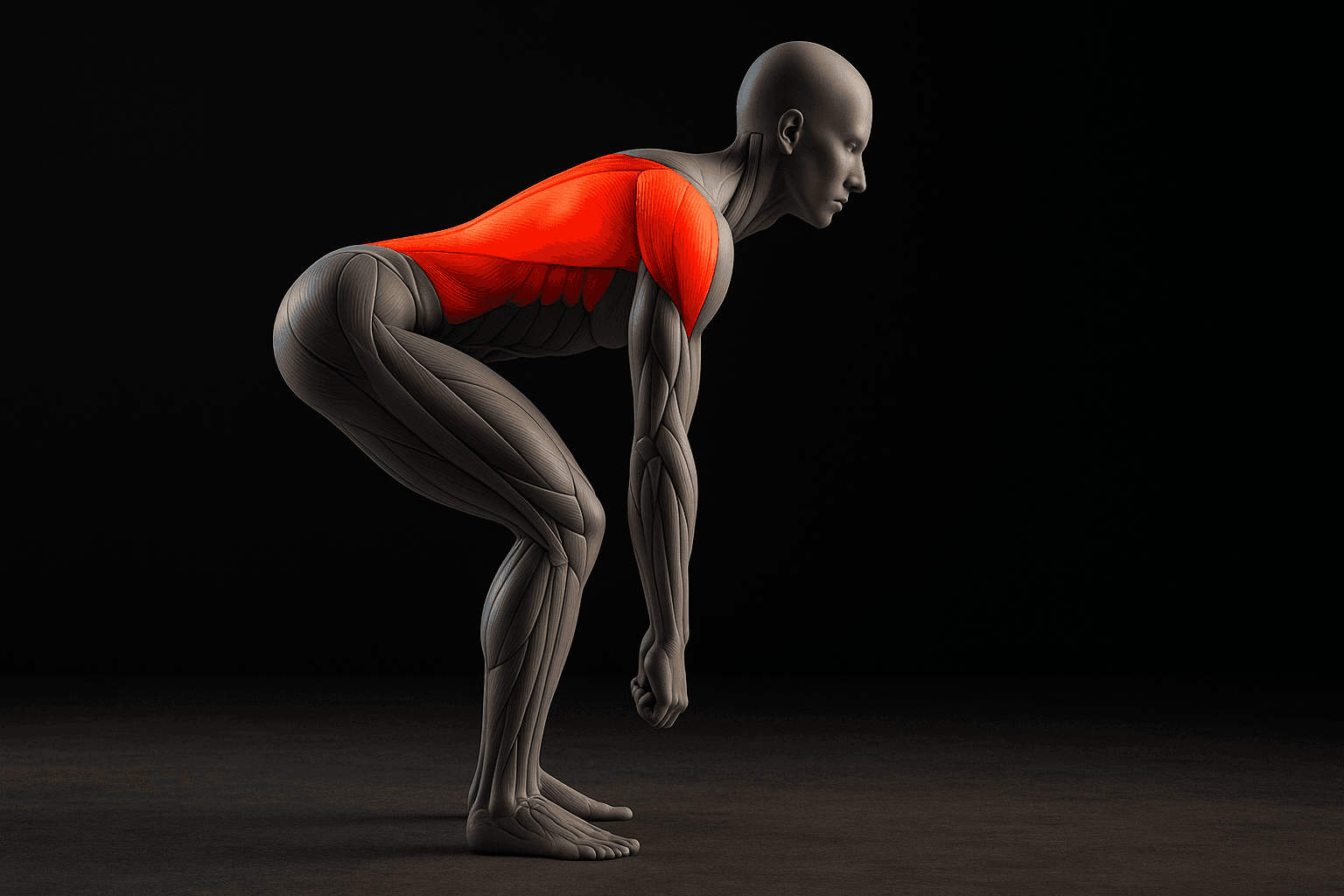
Photo by RepBro.
The most common sumo deadlift mistakes are: hips rising too fast, knees collapsing in, rounded upper back, bar too far from shins, weak brace or bad breathing, and incorrect foot width or toe angle. Each costs strength and increases injury risk, but each has a single, concrete fix you can practice immediately.
Why do my hips shoot up before the bar moves?
Why it happens: You set up with your hips too low relative to your moment arms or you push your feet instead of driving through the floor. Your hamstrings and glutes then get short-changed by a hip-first pull.
What it costs: Bar path becomes more vertical and back-dominant, reducing the use of hip extensors and limiting how much you can lift. It also increases low-back strain.
Fix: Set a tougher initial position. With the unloaded bar, wedge a 1–2 cm (0.5–0.75 in) lift under your heels or practice a static setup where you feel tension in the hamstrings and glutes before the pull. Cue "push the floor away" and make the first movement a strong leg drive with the hips and knees extending together. Film a set to confirm hips and shoulders rise at the same rate.
Why do my knees cave inward (valgus)?
Why it happens: Weak hip abductors/external rotators or foot collapse. With a wide stance, the knees have to track over the toes; if the hips are weak, the knees drift in.
What it costs: Reduced force transmission through the legs, unfinished lockouts, and increased knee stress—especially at heavier loads.
Fix: Strengthen and cue. Add 2–3 weekly accessory sets of banded lateral walks or clamshells to build hip control. During the lift, place a light band around the knees and actively press knees out to keep the femur tracking over the second toe. This immediate cue improves bar path and leverages hip torque.
Why is my upper back rounding?
Why it happens: Fatigue, poor thoracic mobility, or setting up with shoulders too far forward over the bar. In sumo, the torso is more upright, so poor thoracic position shows up fast under load.
What it costs: A rounded upper back shortens the posterior chain’s lever arm and reduces your ability to keep the bar close; it also changes load distribution and makes heavy locks harder.
Fix: Improve position and tightness. Before each set, take a deep belly breath and lift your chest using scapular retraction—think "chest up, ribs down." Do one or two heavy warm-up reps at a conservative load (50–70% of working weight) focusing on an upright thoracic position. Add 2–3 minutes of daily thoracic mobility drills and band pull-aparts as assistance work.
Why is the bar drifting away from my shins?
Why it happens: Poor starting setup—bar too far over midfoot, hips set too back, or lack of tension in the lats. When the bar moves out, the lever arm increases and the lift becomes harder.
What it costs: Longer moment arm on the lower back, earlier sticking points, and reduced technical efficiency. The consequence is less weight lifted and higher low-back demand.
Fix: Re-establish bar-to-shin contact at setup. Stand so the bar is over mid-foot, then bend to touch the bar with his shins just behind the bar. Pull the bar into your shins with your lats engaged before lifting—imagine sliding the bar up your shins. Small positional tweaks at setup save heavy energy later.
Why am I losing my breath or not bracing properly?
Why it happens: Poor breathing technique, pausing too long between breath and pull, or lifting with only chest breathing. Without intra-abdominal pressure you lose spinal stiffness.
What it costs: Less spinal support and increased risk of flexion under load. Performance suffers because you can't transfer force efficiently from legs and hips through the core.
Fix: Use the 3-step brace. Take a deep diaphragmatic breath into your belly and lower ribs, brace the core like someone is about to punch you, then hold that pressure while pulling. Practice this with lighter sets and keep the exhale controlled only after lockout.
Is my stance or toe angle wrong?
Why it happens: People copy a stance that looks wide on Instagram without considering their hip anatomy or mobility. Toes pointed too much or too little changes hip mechanics.
What it costs: Wrong stance reduces torque from the hips, can overwork the adductors or knees, and makes the lift inefficient or uncomfortable.
Fix: Use a small experiment protocol. Start with feet that feel moderately wide—about 1.5–2 times shoulder width—and point toes 10–30 degrees out. Do a few warm-up sets and tweak: if you feel pinching in the hips, widen or reduce toe angle; if you struggle to engage glutes, try a slightly narrower stance. Keep the bar path vertical and choose the stance that lets you pull most comfortably and efficiently.
Any safety considerations?
Stop any set if you feel sharp or unusual pain and consult a qualified professional; this article does not diagnose injuries. Work progressively—avoid sudden jumps in load—and prioritize technique-focused sets before heavy attempts. If you track lifts and want app support, check RepBro for logging and cues: https://apps.apple.com/us/app/gym-workout-coach-repbro/id6763749305.
Final quick checklist before every heavy set: feet positioned, toes and knees aligned, bar snug to shins, deep belly breath and brace, chest up, and cue push the floor away. Small setup wins lead to consistent numbers and fewer setbacks.
One-sentence takeaway: Correcting these six common errors with focused setup, breathing, and a few targeted accessory exercises will make your sumo deadlift stronger and safer without magic or hype.
Frequently asked questions
- How wide should my sumo stance be?
- Start roughly 1.5–2 times shoulder width and adjust until your hips can sit back with your shins vertical and comfortable hip external rotation; toes typically point 10–30 degrees outward.
- Is sumo better than conventional deadlift?
- Neither is universally better—sumo favors those with longer torsos or limited hip mobility, conventional favors longer legs; choose based on comfort, bar path, and strength. For a side-by-side look see https://www.repbro.app/vs.
- How often should I practice sumo deadlifts?
- Practice 1–2 times per week on programmed days, varying intensity and volume; use technique-focused lighter sessions before heavy days to lock motor patterns.