The Most Common Upright Row Mistakes (and How to Fix Them)
Clear, evidence-aware guide to the top upright row mistakes, why they happen, what you lose or risk, and one practical fix per mistake. Safe, neutral coaching.
Photo by RepBro.
Upright row mistakes tend to cluster around the same mechanical faults: pulling with too high an elbow, a too-narrow grip, cheating with momentum, shrugging the shoulders, poor wrist position, or leaning back. Each fault costs shoulder health or training effect — below are why they happen, what they cost, and one concrete fix.
What happens when my elbows fly higher than my shoulders?
Why it happens: Lifters often try to pull the bar to chin level to ‘‘feel’’ the lift or because the cue is “lead with the elbows.” With a narrow grip that elevates the humerus into a position where the acromion and rotator cuff space narrows.
What it costs: Repeatedly taking the upper arm above shoulder height under internal rotation increases shoulder impingement risk and shifts work away from the mid-deltoid to passive shoulder structures. Strength and hypertrophy from a safe range are reduced if you leave the movement in a risky zone.
Concrete fix: Stop the upward path at or just below shoulder height. Use a mirror and an external cue: ‘‘stop when your elbows reach shoulder level’’ or place a lightweight box at shoulder height to touch the bar lightly as a mechanical stop.
Why does my shoulder click or hurt during upright rows?
Why it happens: Small joint anatomy varies; a narrow grip plus high elbow forces internal rotation during elevation and can pinch the subacromial space. Poor rotator cuff strength or prior irritation magnifies that effect.
What it costs: Pain reduces training consistency and can evolve into tendinopathy if ignored. Pain also forces compensation patterns that blunt deltoid development.
Concrete fix: Widen your grip by a few centimetres (in many cases a grip roughly shoulder-width or slightly wider reduces internal rotation) and cue slightly externally rotated hands (thumbs toward the bar rather than palms fully under). If pain persists, substitute with lateral raises or cable high-rows until cleared.
Why am I using momentum or jerking the bar up?
Why it happens: The upright row is a high-leverage movement for shoulders and traps. When load exceeds the lifter’s capacity, they pull with the torso back, use leg drive, or snap the weight up.
What it costs: Cheating reduces time under tension in the target muscles, increases injury risk (low back, shoulder), and gives a false impression of strength.
Concrete fix: Reduce load 20–40% and focus on a controlled 1–2 second concentric and 2–3 second eccentric, or switch to strict single-arm dumbbell rows for the same muscle emphasis without momentum. Stop the set when form fails.
Why do I feel it mainly in my traps and not my delts?
Why it happens: If you lead with an elevated scapula (shrug) instead of driving the elbow upward and outward, the upper trapezius dominates. Poor scapular control or an intent to lift heavier weight favors trap recruitment.
What it costs: You miss work on the lateral deltoid, reducing shoulder width development and neglecting intended muscle targets.
Concrete fix: Cue ‘‘lead with the elbow toward the midline, not the ear’’ and think of pulling the elbow up and out. Practice light sets focusing on scapular stability: pull the elbows up while keeping the shoulders down and back.
Why do my wrists hurt on upright rows?
Why it happens: Upright rows with a narrow barbell grip force wrist and forearm into end-range extension and ulnar deviation for some lifters. This compressive angle can irritate wrists and the distal radioulnar joint.
What it costs: Wrist pain limits load and volume, and can make even basic pressing uncomfortable.
Concrete fix: Switch to dumbbells or use a wider grip that permits a neutral wrist. Alternatively, use a triceps rope on a low cable and perform high-cable rows with a similar elbow path but a neutral grip.
Why do I lean back during the upright row and feel strain in my low back?
Why it happens: Leaning back is a common compensation when the load is too heavy or the lifter is trying to increase the bar path. Weak core bracing or poor hip hinge awareness contributes.
What it costs: Low-back strain, reduced shoulder isolation, and a higher risk of acute injury.
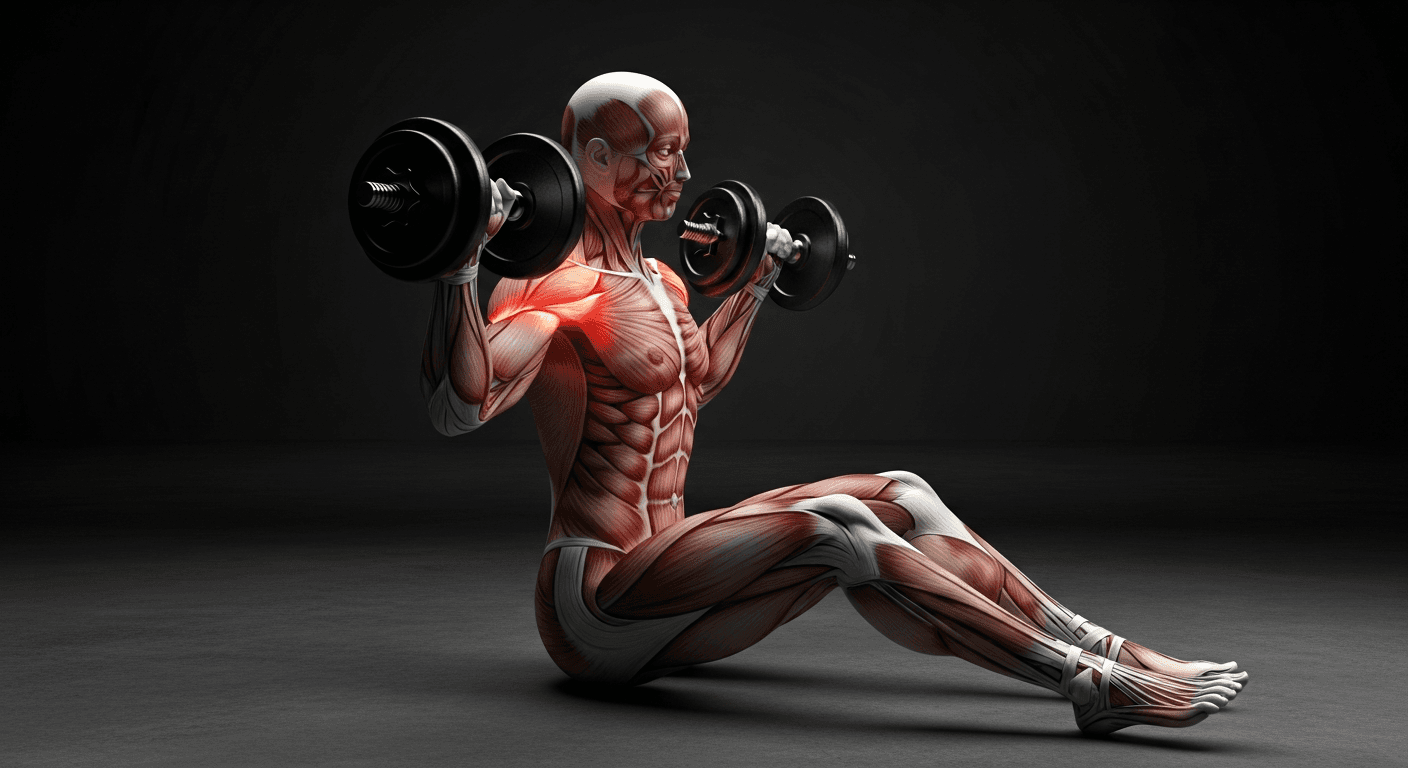
Concrete fix: Shorten the range of motion and maintain a tall chest with a neutral spine. Use lighter weights until you can do sets without any torso extension. Alternatively, perform seated upright rows to remove torso compensation.
Which implement is safest: barbell, dumbbell, or cable?
| Implement | Pros for control | Cons for shoulder health |
|---|---|---|
| Barbell (narrow) | Stable, easy to load | Tends to lock wrist and shoulder into internal rotation; higher impingement risk |
| Dumbbells | Allow natural wrist rotation and independent path | Requires more coordination; can still cause impingement if elbow path is too high |
| Cable/rope | Constant tension and neutral grip options | Requires setup; improper line of pull can change mechanics |
Choose based on comfort and the ability to maintain a safe elbow height and wrist position.
What are quick cues and a sample progression to keep upright rows useful?
Quick cues: ‘‘Elbows to shoulder height, not ears,’’ ‘‘lead with the elbow out, not the shoulder up,’’ ‘‘keep shoulders down and back,’’ and ‘‘use a neutral wrist if it hurts.’'
Progression: Start with light dumbbells or cable with a neutral grip, build sets of controlled reps without shrugging, increase load only when you can keep strict form for all reps.
Safety note
Stop if you feel sharp or radiating pain. This article does not diagnose conditions; consult a qualified clinician for persistent pain. No exercise is risk-free.
What can apps or AI coaching not do for your upright row form? (Limitations)
No app or AI can reliably replace an in-person physical assessment: they can’t palpate, measure joint angles clinically, or fully evaluate movement compensations in three dimensions. Similarly, no program guarantees results without consistent execution and appropriate recovery. For suspected structural injuries or persistent pain, seek a qualified clinician or coach. An app can give cues and programmed progressions but cannot perform hands-on rehab, personalised manual therapy, or definitive diagnoses.
If you use remote coaching tools, treat them as one input among many: pair cues with video feedback from a qualified coach when possible.
End note: Upright rows can be a useful accessory for shoulder development when performed within a comfortable range, with an appropriate grip, and a focus on elbow-driven mechanics. Prioritize control, stop at shoulder height, and substitute variations if you have persistent discomfort.
Frequently asked questions
- Does the upright row cause shoulder impingement?
- Upright rows can increase impingement risk for some lifters because the movement combines shoulder elevation with internal rotation. Risk depends on grip width, bar path, pre-existing anatomy, and load. Modify grip, limit range, or choose alternatives if you feel sharp anterior shoulder pain.
- How heavy should I load upright rows?
- Use a load you can control for the full set without shrugging, swinging, or pain. For many people that means a moderate weight allowing 6–15 controlled reps. Prioritize technique over load: lose weight if form breaks down.
- Are dumbbells safer than a barbell for upright rows?
- Dumbbells allow a more natural wrist and shoulder path and often reduce internal rotation compared with a narrow barbell grip. They can be a better option if you have shoulder discomfort, but any implement can cause issues if used incorrectly.
- What should I do if the upright row hurts?
- Stop if you feel sharp pain. Reassess grip width, lower the bar height you pull to, switch to dumbbells or cables, and consult a qualified clinician for persistent pain. Avoid forcing the movement while irritated.