Upright Row: Muscles Worked and Effective Alternatives
Which muscles does the upright row train, where it fits in a program, and practical alternatives for equipment limits, shoulder issues, or plateaus.
Photo by RepBro.
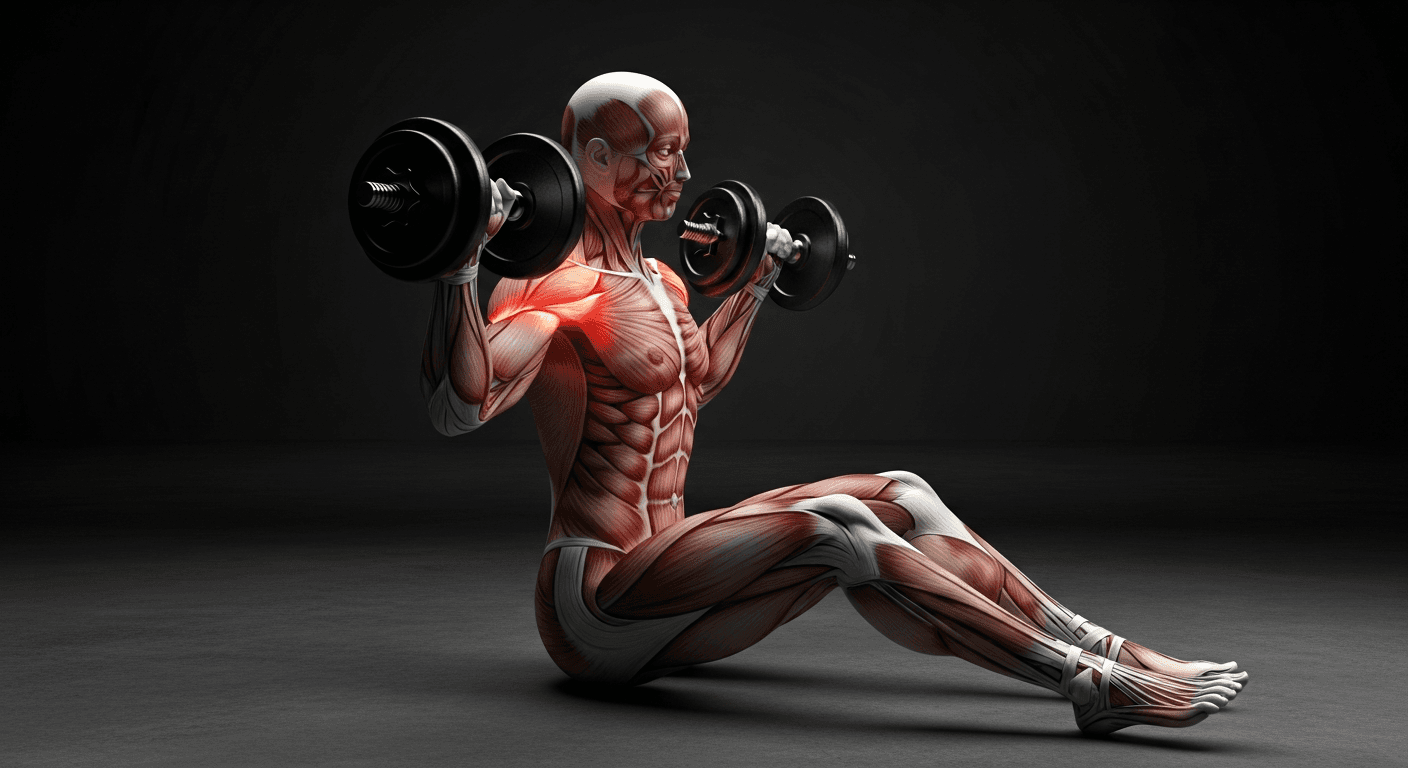
The upright row primarily trains the lateral (middle) deltoid and upper trapezius; it also involves the anterior deltoid, supraspinatus, biceps and forearm muscles as secondary contributors. Use variations or alternatives if you have shoulder pain, limited equipment, or want greater isolation for the delts.
What muscles does the upright row train and which are secondary movers?
Primary movers:
- Middle (lateral) deltoid — the main shoulder abductor in the movement.
- Upper trapezius — elevates the scapula during the pull.
Secondary/assistive muscles:
- Anterior deltoid (less than the lateral head).
- Supraspinatus and other rotator-cuff muscles as stabilizers.
- Biceps brachii and forearm flexors for elbow flexion and grip.
- Levator scapulae and small scapular retractors assist scapular motion.
The upright row is a combined scapular elevation and shoulder abduction movement. It is more trapezius and lateral deltoid dominant than a pure lateral raise, and less posterior-delt focused than rowing motions that emphasize scapular retraction.
Where does the upright row fit in a program?
Place upright rows as an accessory shoulder exercise: after major compound lifts (presses, pulls) and before or alongside other shoulder isolations. If your goal is hypertrophy, include them as part of the weekly volume for shoulders within commonly recommended ranges for muscle growth. For strength emphasis, prioritize compound pressing and vertical pulls.
Programming notes (evidence-aware):
- Frequency: Many review-based guidelines recommend training a muscle group multiple times per week for growth; 2 sessions weekly for shoulders is common.
- Volume: Aim to distribute weekly sets for the deltoids within broadly recommended ranges for hypertrophy rather than relying on a single exercise.
- Progression: Use progressive overload by increasing load, reps, or controlled tempo over weeks. If you’re uncertain about exact set counts, prioritize consistent, gradual increases and recovery.
How should I perform the upright row safely?
Key technique cues:
- Grip: A shoulder-width to slightly wider grip reduces internal rotation at the shoulder compared with a narrow grip. Some lifters use a neutral-grip dumbbell variation for comfort.
- Range: Pull to chest or clavicle height; avoid aggressively pulling to the chin if that causes discomfort.
- Elbow path: Elbows should track above the wrists; lead with the elbows rather than jerking with the hands.
- Spinal position: Maintain a tall chest and neutral spine; avoid excessive torso lean.
Safety note: Stop if you feel sharp pain in the shoulder or arm. If you have a history of shoulder impingement or instability, consult a qualified professional before loading this movement. No text or app can diagnose — only a clinician or coach who examines you can.
What are good alternatives and when to pick each?
Below are four practical alternatives and guidance on when to choose them.
| Exercise | Primary muscles | Equipment | When to pick | Cautions |
|---|---|---|---|---|
| Dumbbell upright row (neutral grip) | Lateral deltoid, upper trap | Pair of dumbbells | Limited barbell access; neutral grip reduces internal rotation stress | Use lighter loads first if shoulders are sensitive |
| Lateral raise (single or double-arm) | Lateral deltoid (isolation) | Dumbbells or cables | Want targeted lateral-delt hypertrophy or to avoid trap dominance | Use strict form; avoid using momentum |
| Face pull | Posterior deltoid, external rotators, upper back | Cable with rope or band | Improve shoulder health, posture, and external rotation strength; rehab-friendly | Prioritize scapular control and scapular retraction |
| High pull / power high pull (explosive) | Traps, delts, posterior chain involvement | Barbell or dumbbell | When training power/athleticism and triple-extension synergy is desired | Technical lift; start light and learn progression |
When to choose each (short guidance):
- Choose dumbbell upright rows if you have access to dumbbells and prefer a neutral grip or need unilateral balance work.
- Choose lateral raises when the goal is pure lateral-delt size or when you want to avoid trapezius overdevelopment.
- Choose face pulls if you have shoulder pain history, want to strengthen external rotators, or aim to improve posture and scapular health.
- Choose high pulls only if coaching and intent include power development; they are less isolation-focused.
How to modify the upright row if you have shoulder issues?
- Use a wider grip or neutral-grip dumbbells to reduce internal rotation at the shoulder.
- Limit range — stop at clavicle or chest height rather than pulling to the chin.
- Swap to face pulls and lateral raises to target the same areas while reducing impingement risk.
- Regress to lighter loads and focus on tempo and control before increasing weight.
Comparisons at a glance
- Upright row: compound shoulder/trap emphasis, efficient for combined stimulus.
- Lateral raise: isolates middle deltoid for hypertrophy.
- Face pull: posterior delts and rotator cuff; useful for health and posture.
- Dumbbell neutral-grip upright row: similar stimulus with potentially less shoulder stress.
Limitations — what apps and AI coaching cannot do
- No app or AI can reliably see and correct your live form; video feedback from a qualified coach or in-person assessment is necessary for technical diagnosis.
- AI cannot diagnose injuries or create a medical rehab plan; a licensed clinician is required for injury management.
- A program only works when you apply it consistently; adherence, recovery, sleep, and nutrition are decisive variables beyond app selection.
Safety reminder: If you experience sharp pain or instability, stop the lift and consult a qualified professional. The information here is educational, not diagnostic.
If you track lifts or want simple logging and progress tools, consider an evidence-friendly tracker like RepBro to monitor volume and progression over time.
Summary: Upright rows emphasize the lateral deltoid and upper traps and can be useful accessory work. Use grip and range adjustments or pick alternatives (lateral raises, face pulls, neutral-grip rows) if you have shoulder concerns, limited equipment, or want more targeted growth. Consistent, progressively overloaded training within established weekly volume and frequency guidelines will give the best long-term outcome.
Frequently asked questions
- Which muscles does the upright row target?
- The upright row primarily targets the lateral (middle) deltoid and the upper trapezius. It also recruits the anterior deltoid, supraspinatus, biceps (as an elbow flexor), and forearm grip muscles as secondary contributors.
- Is the upright row bad for my shoulders?
- Upright rows can irritate people with prior shoulder impingement because the movement involves internal rotation at higher abduction. Many tolerate it with technique changes (wider grip, not pulling above clavicle) or by choosing safer alternatives like face pulls and lateral raises.
- What should I do if I hit a plateau on upright rows?
- If progress stalls, vary stimulus: switch to single-arm dumbbell rows for balance, increase weekly volume within recommended ranges, use tempo changes, or swap to exercises that target the same muscles (lateral raises, face pulls) to break the plateau.