Walking Lunge: Proper Form, Step by Step
Definitive walking lunge form guide: setup, step-by-step cues, breathing, tempo, common mistakes with fixes, and safety advice for pain-free practice.

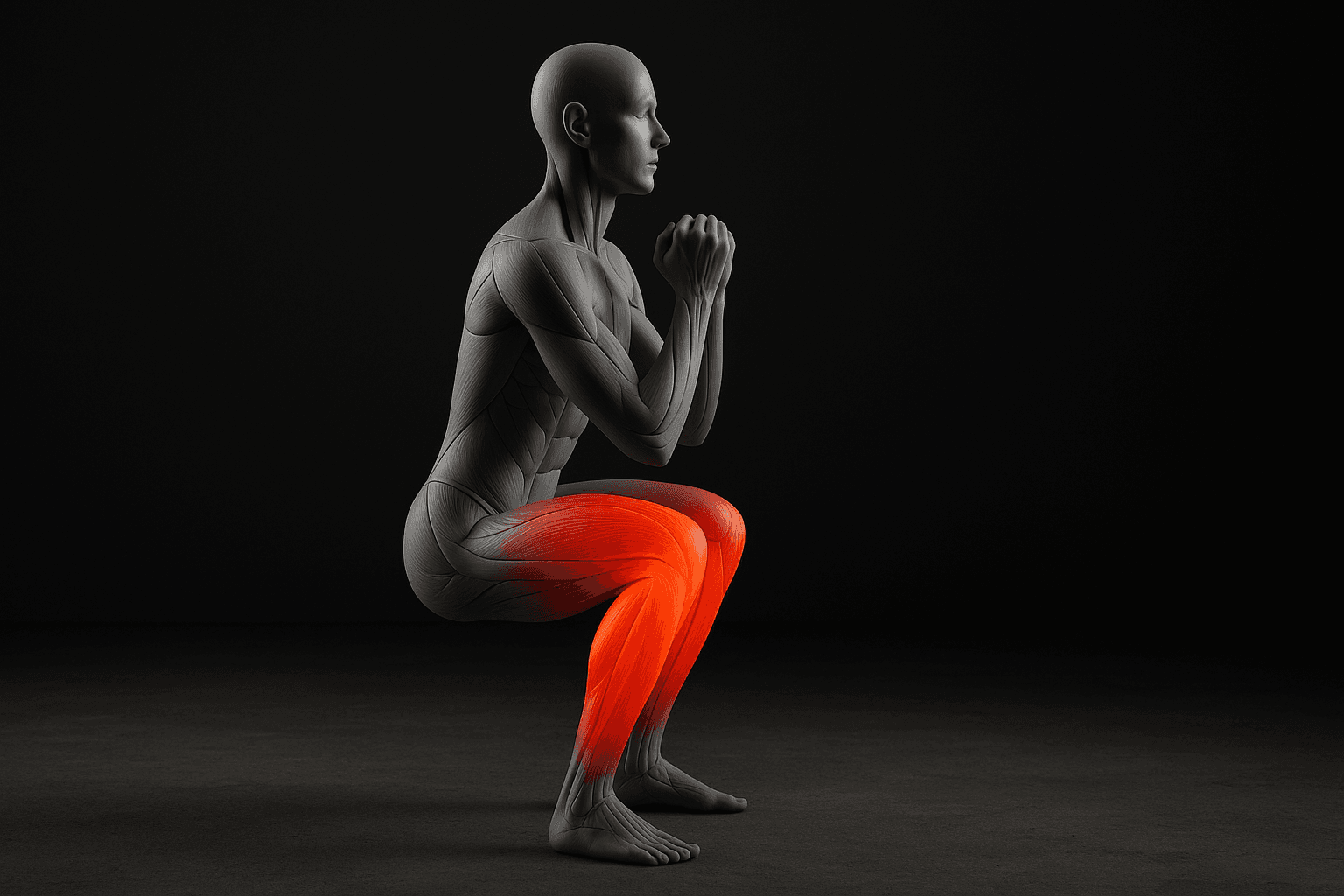
Photo by RepBro.
The walking lunge performed with proper form is a controlled forward-step lunge where each repetition finishes by stepping the rear foot forward into the next lunge; execute it with an upright torso, front knee tracking over the toes, and a steady tempo for safe and effective loading.
What is the setup for a walking lunge?
- Stand tall with feet hip-width apart and shoulders stacked over hips.
- Choose a neutral gaze 2–3 m (6–10 ft) ahead to help keep your chest proud.
- Hands: place on hips, hold light dumbbells at your sides, or keep hands clasped in front for balance.
- Footwear: wear flat, supportive shoes.
- Space: allow a clear path of 3–5 m (10–16 ft) to perform multiple steps.
Equipment options:
- Bodyweight: for beginners or warm-ups.
- Dumbbells or kettlebells: for added load (keep weight moderate to maintain form).
How do I perform the walking lunge step by step?
- Stand tall and take a deliberate forward step of about 60–90 cm (24–36 in). Aim so your front shin can reach about 90° at the knee when you lower.
- As your front foot plants, bend both knees and lower your hips until the front thigh is ~parallel to the floor. The back knee should come close to the ground but not slam into it.
- Keep your torso upright (0–10° forward lean), chest high, and shoulders back. Don't collapse into the hips.
- Drive through the front heel and push off the back foot, bringing the rear foot forward to meet or pass the front foot and immediately step into the next lunge.
- Repeat for the desired number of steps or distance, alternating legs with each step.
Form checkpoints (use these each rep):
- Front knee tracks over the 2nd toe (no collapsing inward).
- Weight is distributed slightly more through the front heel on the push.
- Spine stays neutral—avoid excessive rounding or arching.
What breathing and tempo should I use?
- Breathing: Inhale as you lower into the lunge (eccentric), exhale as you push to the next step (concentric). This stabilizes the core and helps power the movement.
- Tempo: Use a controlled 2-1-1 tempo as a default:
- 2 seconds lowering (eccentric)
- 1 second brief transition at the bottom
- 1 second drive/step forward (concentric)
- Progression: slow the descent to 3s to emphasize control, or increase tempo slightly for conditioning but never at the expense of alignment.
How many reps and sets should I do?
- For general strength and balance: 2–4 sets of 8–12 steps per leg.
- For endurance/conditioning: 2–3 sets of 20–40 total steps (alternating).
- Add weight when you can maintain perfect form for all prescribed reps.
What are the common mistakes and how do I fix them?
- Knee collapsing inward (valgus): Fix — focus on pushing the front knee out over the 2nd toe; cue "spread the floor with your front foot" and strengthen glutes with single-leg glute bridges.
- Torso leaning forward excessively: Fix — shorten stride slightly, lift chest, and think "tall spine"; reduce weight if using dumbbells.
- Too short a step (knees track too far forward): Fix — increase step length so front knee can form ~90°; ensure the front knee stays above the ankle.
- Overstriding (step too long): Fix — reduce step length—overstride shifts load to hips and can cause balance issues.
- Pushing off the toes of the back foot: Fix — emphasize driving through the heel of the front foot and the ball-to-heel of the back foot; practice slow single steps.
- Rushed reps and poor control: Fix — use the 2-1-1 tempo and lower the weight or reps until control returns.
How can I regress or progress the walking lunge?
- Regressions (make easier): hold onto a stable support for balance, perform reverse lunges (step back instead of forward), reduce range of motion, or do stationary split squats.
- Progressions (make harder): add dumbbells/kettlebells, perform walking lunges with a loaded barbell, use a deficit (stand on a low step), or increase steps per set.
Is the walking lunge safe? What should I watch for?
Safety note: Stop the exercise if you feel sharp pain and consult a qualified professional—this guide is informational and not a diagnosis. Maintain control on each rep, avoid heavy loads that force form breakdown, and progress load gradually.
How does the walking lunge compare to other lunge variations?
Walking lunges add a dynamic balance and transitional challenge compared with stationary split squats or reverse lunges. If you want a simple comparison of lunge variations and when to use them, see this quick article comparing options on RepBro: https://www.repbro.app/vs. For workout tracking and guided progressions, consider the RepBro app.
Quick coaching cues to remember
- "Tall chest, eyes forward."
- "Step about 60–90 cm (24–36 in)."
- "Knee over 2nd toe."
- "Drive through the front heel."
- "2 seconds down, 1 second transition, 1 second up."
One-sentence takeaway: Practice walking lunges with controlled tempo, upright posture, and attention to knee tracking—slow progression and simple cues beat heavy loads with sloppy form every time.
Frequently asked questions
- How far should I step in a walking lunge?
- Aim for a forward step of about 60–90 cm (24–36 in) depending on your height—long enough to allow your front knee to form a 90° angle while keeping your torso upright.
- Should my knee go past my toes in a lunge?
- A small amount is OK for mobility differences, but generally keep the knee above the ankle rather than pushed far past the toes; focus on tracking the knee over the 2nd-3rd toe.
- How many reps and tempo are recommended?
- Use 8–15 steps per leg for general strength and conditioning with a controlled tempo like 2-1-1 (2s descent, 1s transition, 1s drive) and progress load or volume gradually.