What Actually Matters in a Gym App for Absolute Beginners
The three non-negotiable features a gym app for absolute beginners needs: clear daily direction, dead-simple logging, and instant form help. Skip the feature bloat.
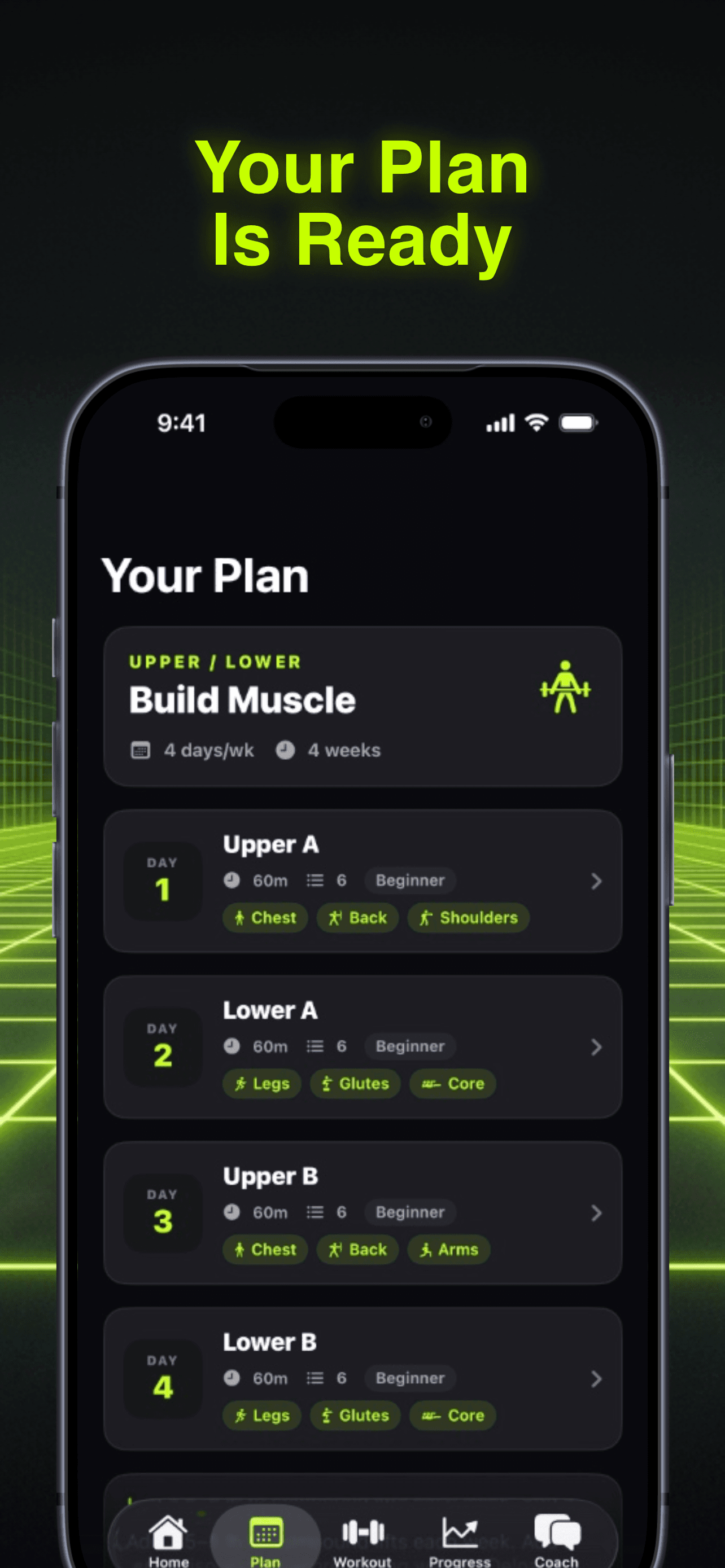
Photo by RepBro.
You downloaded three gym apps last month. You used none of them for more than a week.
Here's why: most fitness apps are built for people who already know what they're doing. They're loaded with features that sound impressive in app store screenshots but overwhelm someone who just wants to know which exercise to do next.
A gym app for absolute beginners needs exactly three things: clear daily direction, dead-simple set logging, and instant access to form help. Everything else is feature bloat that gets in your way.
I've watched hundreds of beginners cycle through apps, and the pattern is always the same. They download something with 47 different workout styles, spend 20 minutes trying to figure out what "Bulgarian split squat 3x8-12 RPE 7" means, then delete it.
The apps that stick do three things exceptionally well.
Clear Daily Direction: No Decisions Required
Your gym app should answer one question the moment you open it: "What do I do today?"
Not "Browse our 500+ workouts." Not "Choose your adventure." Just a single, obvious path forward.
The best beginner-friendly workout apps show you today's workout immediately. No scrolling through menus. No choosing between "Upper Body Blast" and "Functional Strength." You tap the app, see exactly which exercises you're doing, and head to the gym.
This matters more than you think. Decision fatigue kills gym habits before they start. When you're already nervous about looking clueless in the gym, the last thing you need is your app asking you to make six choices before you even get there.
Look for apps that:
- Show today's workout on the home screen
- Generate your plan during onboarding, not every session
- Progress you automatically without asking what you want to do next
Dead-Simple Set Logging: Track Without Thinking
Your second non-negotiable: logging sets should take five seconds, not five minutes.
Most apps overcomplicate this. They want you to log rest periods, rate of perceived exertion, notes about your mood, the gym's temperature, and your breakfast. Meanwhile, you're standing next to a squat rack trying to remember if you just did your second or third set.
The only data that matters for beginners: exercise name, weight, and reps. That's it.
Everything else can come later, once you've built the habit of actually showing up. Right now, your job is to get stronger and track that you're getting stronger. Complex logging systems work against both goals.
The logging screen should be obvious enough that you could use it while distracted, tired, or slightly out of breath. Big buttons. Clear numbers. One tap to add weight, one tap to log the set.
I've seen people abandon perfectly good workout plans because their app made logging feel like homework.
Instant Form Help: No Guessing Games
Here's where most beginner gym apps fail completely: they assume you know how to do the exercises.
You don't. Nobody does when they start. And standing in the gym googling "how to deadlift" while people wait for the bar is not a confidence-building experience.
Your app needs form cues built in. Not just exercise names. Not just rep counts. Actual instructions for how to set up, execute, and troubleshoot each movement.
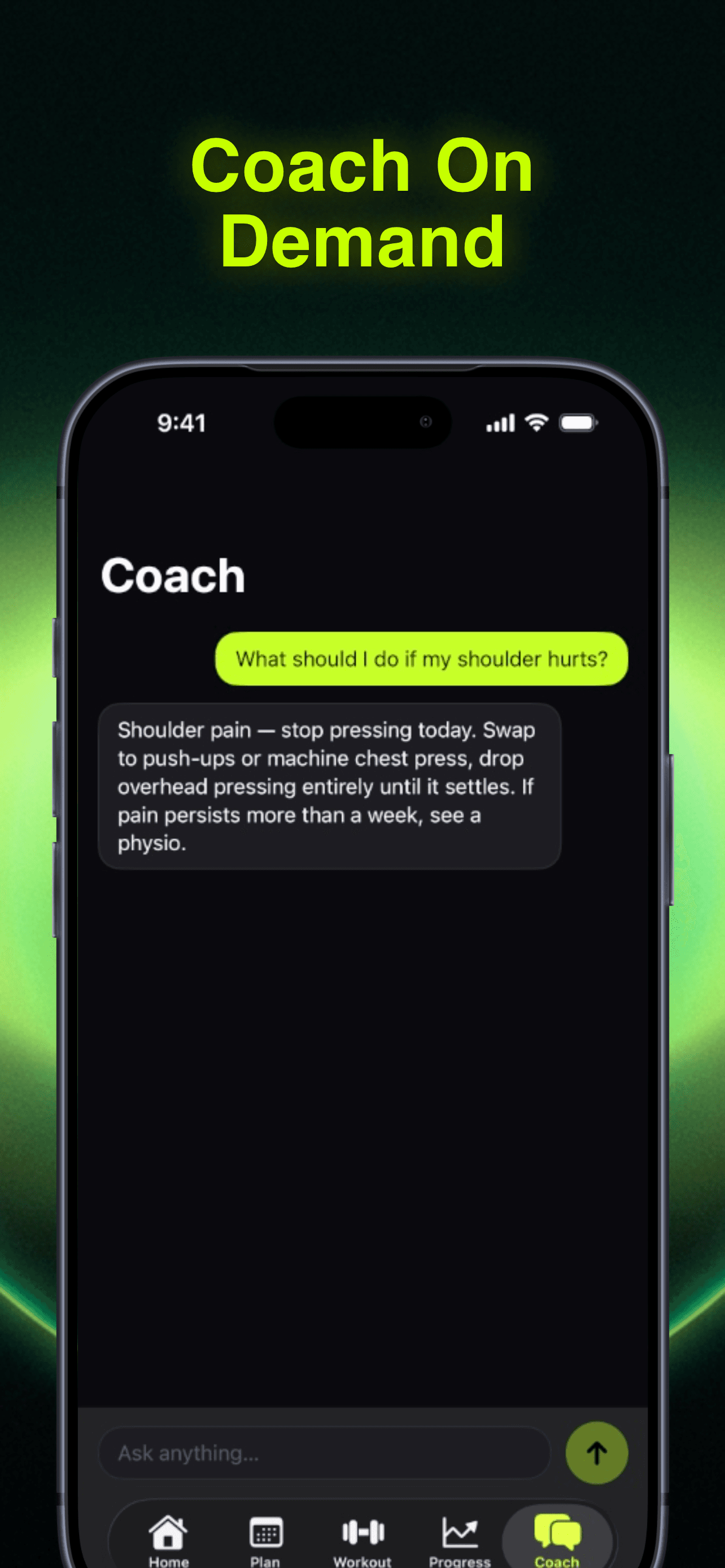
The gold standard is AI coaching that can answer questions in real time. "My lower back feels tight during squats" should get you an immediate, specific answer, not a link to a generic article about squat form.
But even basic apps can do this well with:
- Setup cues for each exercise
- Common mistakes to avoid
- What the movement should feel like when done correctly
Form help isn't optional for beginners. It's the difference between building strength and building bad habits that take months to fix.
What Doesn't Matter (Yet)
Here's what every gym app advertises but beginners don't actually need:
Hundreds of workout options. You need one good program, not 200 mediocre ones. Decision paralysis is real, and it kills momentum.
Advanced periodization. You're not peaking for a powerlifting meet. You need consistent, progressive overload with exercises you can actually perform.
Detailed analytics. Volume load calculations and training stress scores are useful once you've been lifting for six months. Right now, they're just numbers that don't mean anything to you.
Social features. Sharing PRs is fun, but it won't help you figure out why your bench press feels awkward.
Nutrition tracking. Important for results, but most people can't handle building gym and diet habits simultaneously. Pick one, get consistent, then add the other.
The apps that work for absolute beginners do the basics exceptionally well instead of doing everything poorly.
How to Test If an App Actually Works for Beginners
Download it and try to complete your first workout without reading any documentation.
Can you figure out what to do today in under 30 seconds? Can you log your first set without hunting through menus? When you have a form question, can you get an answer without leaving the app?
If the answer to any of those is no, delete it. You need an app that makes lifting easier, not harder.
The right gym app for absolute beginners feels like having a knowledgeable friend at the gym with you. It tells you what to do, keeps track of your progress, and answers your questions without making you feel stupid for asking.
Everything else is just marketing.
Your next workout should feel straightforward, not overwhelming. The app that makes that possible is the one worth keeping.
Frequently asked questions
- What's the most important feature in a gym app for absolute beginners?
- Clear daily direction. The app should immediately show you today's workout when you open it, with no decisions required. Decision fatigue kills gym habits before they start.
- Do beginners need to track RPE and rest periods in their gym app?
- No. Beginners should focus on tracking just three things: exercise name, weight, and reps. Complex logging systems work against building consistent gym habits.
- Should a beginner gym app have hundreds of different workouts?
- No. Beginners need one good program, not 200 options. Too many choices create decision paralysis and prevent consistency, which is the most important factor for beginner success.
- How important is form help in a beginner-friendly gym app?
- Critical. Beginners don't know how to perform exercises correctly, and guessing leads to bad habits and potential injury. The app should provide setup cues, common mistakes, and ideally real-time coaching.
- What should I look for when testing a gym app as a beginner?
- Try to complete your first workout without reading documentation. You should be able to see today's workout in under 30 seconds, log sets easily, and get form help without leaving the app.