The Beginner Barbell Program: First 8 Weeks
An actionable 8-week beginner barbell program: weekly layout, exercises, clear progression rules, warm-up and safety notes, and who should avoid it.
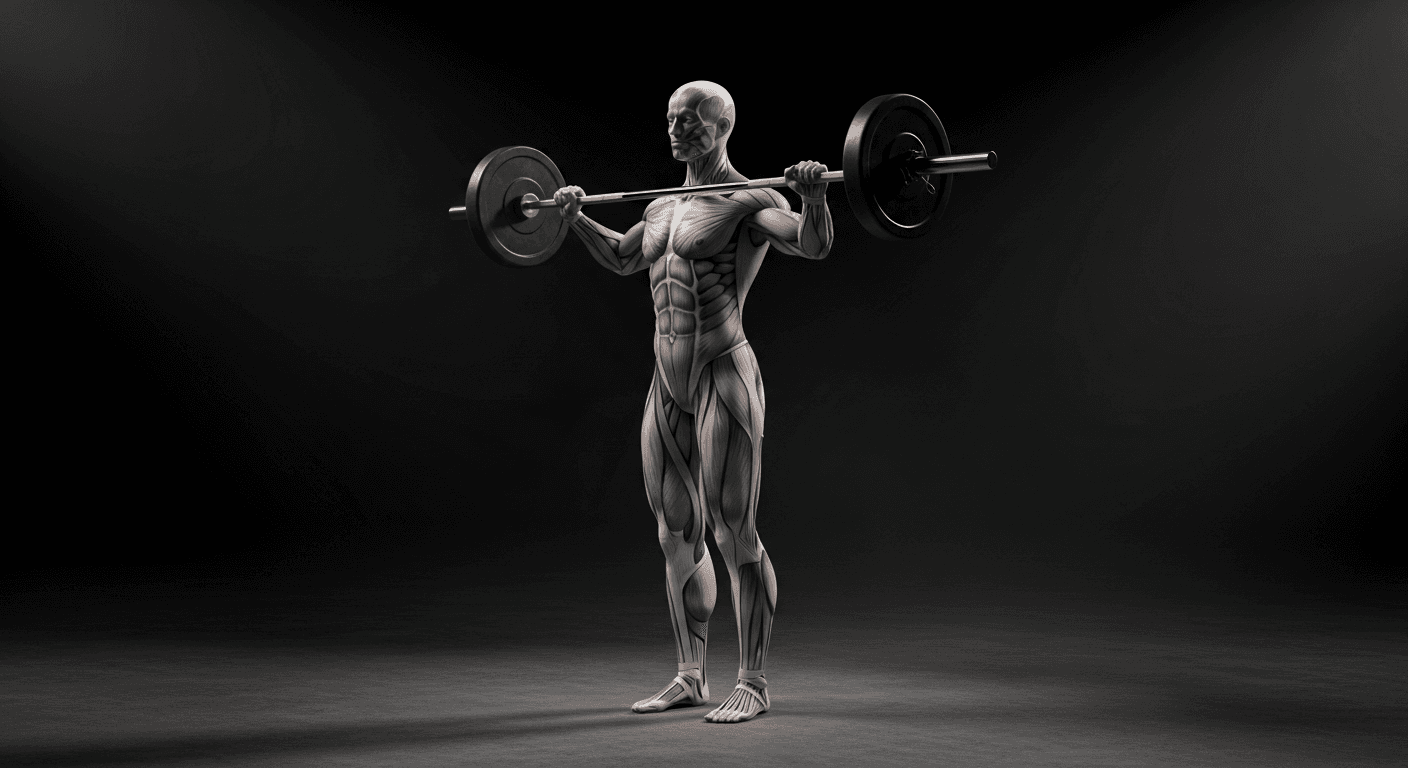
Photo by RepBro.
Answer first: Yes — you can follow a simple, safe, and effective beginner barbell program for the first 8 weeks that emphasizes the big compound lifts, progressive overload, and three training sessions per week. Below is a concrete 8-week plan, why each exercise is included, exact sets/reps, progression rules, warm-up and safety notes, and who should not use this plan.
What does the 8-week program look like each week?
Train three non-consecutive days per week (e.g., Monday/Wednesday/Friday). Alternate Session A and Session B across the week in this pattern: A, B, A / B, A, B etc. That gives balanced exposure to each lift while keeping recovery manageable.
Weeks 1–8 weekly layout (example):
- Monday — Session A
- Wednesday — Session B
- Friday — Session A (Week 2 start will be B on Monday)
Session A
- Squat: 3 sets x 5 reps (3x5)
- Bench Press: 3x5
- Barbell Row: 3x8
- Optional: 2x10 core (plank / hanging knee raises)
Session B
- Squat (light/technique): 2x5 at 60% of Session A top set
- Overhead Press: 3x5
- Deadlift: 1x5 (work set)
- Optional: 2x10 posterior-chain accessory (glute bridge / Romanian deadlift)
Notes: Keep accessory work short. If you prefer 4 sessions/week and have recovery capacity, split into upper/lower with similar compound priorities.
Which exercises should I include and why?
- Squat: primary lower-body mover — builds leg strength and general capacity.
- Deadlift: heavy posterior-chain lift — train once per week for beginners to limit CNS fatigue.
- Bench Press and Overhead Press: primary horizontal and vertical pressing patterns.
- Barbell Row: horizontal pull to balance pressing and strengthen the back.
- Short core/glute accessories: improve stability and carryover.
Exercise selection logic: prioritize multi-joint, loaded barbell movements early in the session while fresh. Limit accessory volume to 6–10 total working sets per session to keep recovery sustainable.
How should I progress weight, sets and reps?
Linear progression is simplest and most effective for true beginners. Follow these rules:
- Start conservative: choose a weight you can complete all sets and reps with 1–2 reps in reserve.
- Add weight each session: +2.5 kg (5 lb) total to upper-body lifts (bench, press, row) and +5 kg (10 lb) total to lower-body lifts (squat, deadlift) when you hit all sets/reps with good form.
- If you miss reps on a lift: repeat the same weight next session. If you miss 2 sessions in a row on the same lift, reduce the increment and add an intermediate step (+1.25 kg per side if plates allow) or change to 3x5 from 5x5 to maintain progress.
- Sets/reps template: most main lifts use 3x5; deadlift uses 1x5 to limit fatigue; rows 3x8 for extra back volume.
- Deload: after 4 weeks you can either: (A) continue linear progression if recovering well, or (B) take a planned lighter week in week 5 at 60–70% volume and 80% load, then resume progression. Many beginners will not need a forced deload before week 8 but listen to recovery signals.
Progress tracking: log every set, weight and RPE. If you consistently hit RPE 9+ for multiple sessions, stop adding weight and adjust volume/intensity.
How do I warm up and practice form safely?
- Warm-up: 5–10 minutes light aerobic activity, dynamic mobility for hips/shoulders, then 2–4 gradual empty-bar to work-set warm-up sets (e.g., 10 reps empty, 5 reps at 50% work weight, 3 reps at 70% work weight).
- Form practice: film your lifts occasionally and compare to reliable coaching cues. Spend slow, technique-focused sets at lighter weight if form degrades.
Safety note on form and pain: stop immediately on sharp or unusual pain. Persistent joint pain or any new acute injury should be assessed by a qualified professional; this article does not diagnose or treat injuries.
What do I do when I stall?
- First, check recovery: sleep, protein intake, stress, and recent life factors.
- Reduce increments: switch to smaller weight jumps (1.25 kg per side) for 1–2 weeks.
- Reduce volume: change a 3x5 to 2x5 on a lift for one week to recover.
- Convert to an intermediate progression: after 8 weeks of linear progress, transition to a program with planned rep ranges (e.g., 3–5 or 5–8) and autoregulated sets.
If after these adjustments you still don't progress, seek coaching for technical tweaks or an individualized program.
Who is this beginner barbell program wrong for?
- People with acute or unresolved injuries that limit safe barbell loading (get clearance from a clinician or coach first).
- Lifters past the true-beginner stage who have already plateaued on linear progression — they need a more complex periodization.
- Athletes with sport-specific demands requiring different movement patterns or priorities (this is a general strength foundation, not sport-specific training).
- Those who cannot commit to consistent 2–3 sessions a week — inconsistent training will limit the utility of progressive loading.
How to track and automate this plan
Log every session. Use simple spreadsheets or an app to add weight automatically and warn when increments are missed. If you use RepBro to track lifts, you can save templates and import plans to automate progression—see the app on the RepBro page and plan-import options at https://www.repbro.app/import.
Final safety reminder: this plan is practical and evidence-aware, but not a medical prescription. Stop on sharp pain and consult a licensed professional for persistent issues.
One-sentence takeaway: Follow this simple 3x/week, compound-first 8-week plan with small, consistent weight jumps and conservative starting loads for reliable beginner strength gains while monitoring recovery.
Frequently asked questions
- Do I need to count calories or lift for time with this program?
- No. This plan focuses on consistent strength progression on barbell lifts; nutrition and conditioning are important but separate topics—aim for adequate protein and consistent calorie intake to support recovery.
- How much weight should I add each session?
- Start with small, fixed increments: add 2.5 kg (5 lb) to upper-body lifts and 5 kg (10 lb) to lower-body lifts each session while you can complete all prescribed sets and reps with good form.
- Can I do this program if I can only train twice a week?
- Yes—use the same exercises and weekly volume but spread across two sessions (A and B) and add the missed session's volume to the other days; progression will be slower but still effective.