A Full-Body Dumbbell Program for Home or Gym
Three-session, full-body dumbbell program with exercise choices, sets, reps, progression rules, and who should avoid it. Ready for home or gym use.

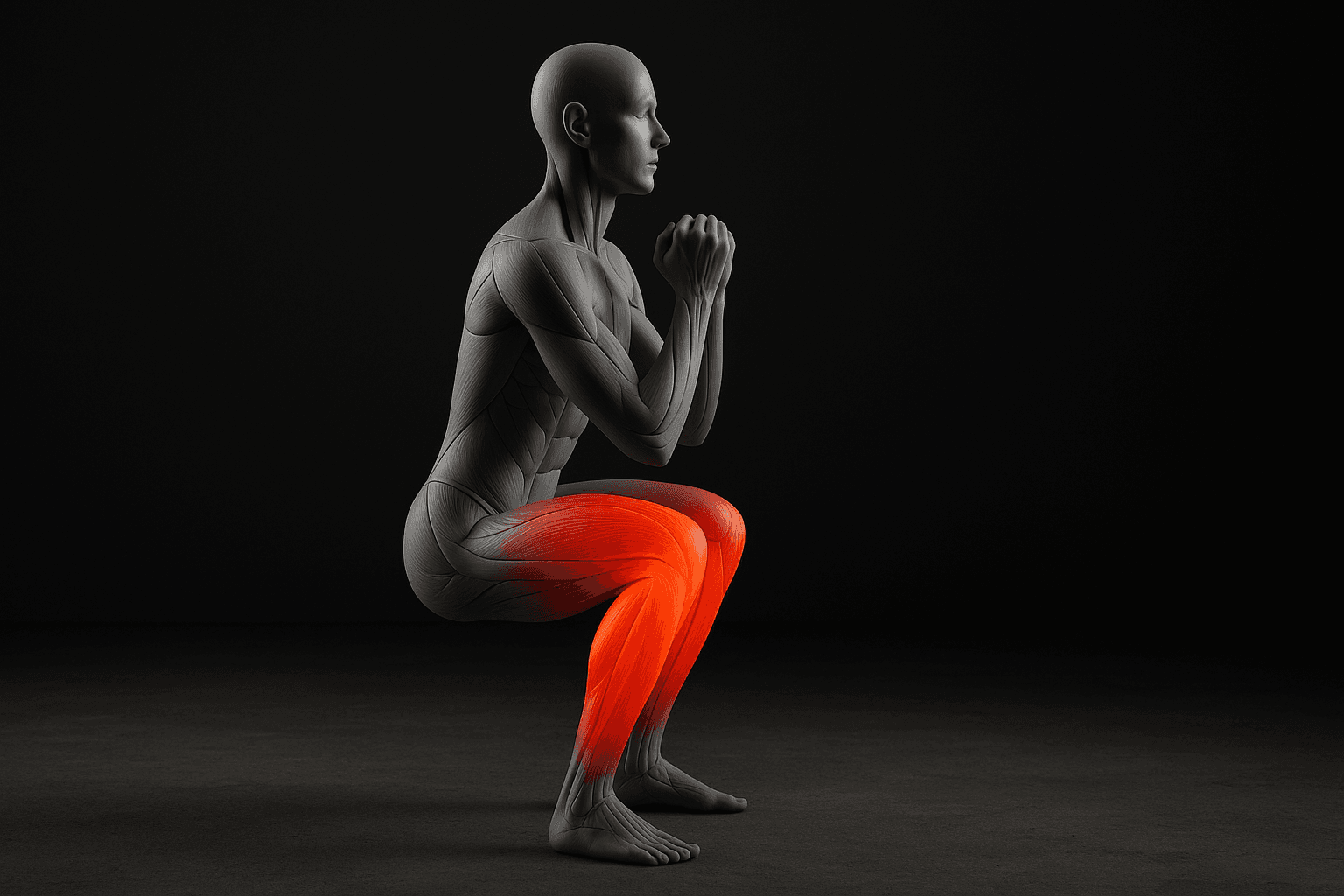
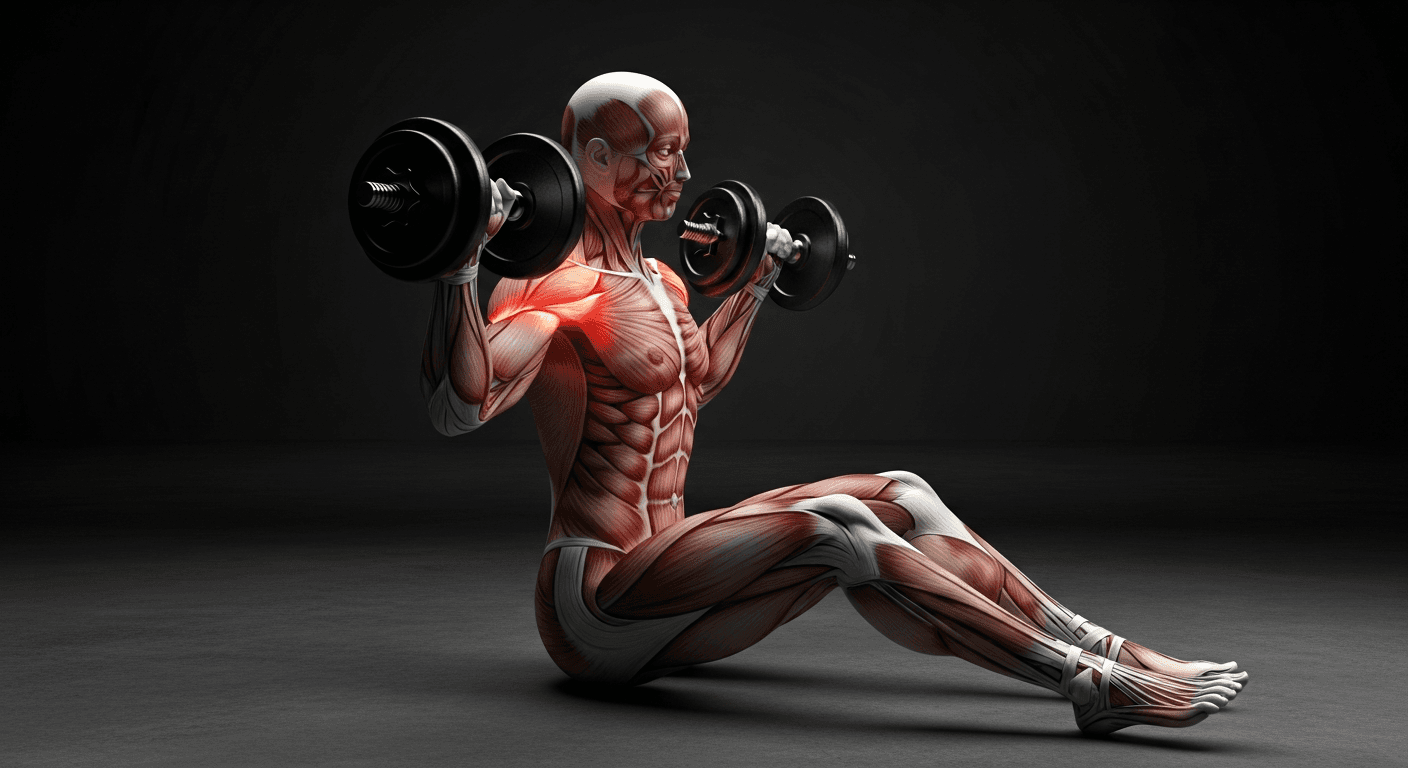
Photo by RepBro.
A full-body dumbbell program trains the entire body each workout using dumbbell exercises so you can build strength and muscle with minimal equipment, either at home or in the gym. Below is a practical 3-session per week plan, concrete exercise choices, progression rules, and clear guidance on who should not use this approach.
What does the weekly layout look like?
- Frequency: 3 full-body sessions per week, e.g., Monday/Wednesday/Friday. Each session about 45–60 minutes.
- Structure: Start with a compound lower-body movement, then an upper-body push, upper-body pull, a hinge pattern, single-leg or carry work, and finish with core or conditioning.
- Optional: Add a 4th light session focused on mobility, technique, and 10–15 minutes of conditioning if you recover well.
Sample split
- Workout A: Goblet squat 3x6, Dumbbell bench press 3x6, One-arm row 3x8, Romanian dumbbell deadlift 3x8, Farmer carry 3 x 40 m, Plank 3 x 30s
- Workout B: Split squat 3x8 per leg, Standing dumbbell press 3x6, Chest-supported row 3x8, Single-leg RDL 3x8 per leg, Suitcase carry 3 x 30 m, Hollow hold 3 x 20s
- Workout C: Dumbbell front squat or high-volume goblet 3x8, Incline dumbbell press 3x8, Two-arm bent-over row 3x6, Dumbbell swing 3x12, Walking lunge 2 x 12 steps, Side plank 3 x 20s per side
Adjust exercise order if you need to prioritize a specific lift. Rest 90–180 seconds between compound sets, 60–90 seconds for accessory work.
Why these exercises and how to choose substitutes?
Exercise-selection logic
- Prioritize compound, multi-joint moves: they give the most stimulus per set and are safer to load with dumbbells. Examples: goblet squat, dumbbell press, rows, Romanian deadlift.
- Balance push and pull across the session and week to protect shoulder health.
- Include a hinge for posterior chain, a squat pattern for quads, single-leg work for stability, and carries for grip and core integration.
- Choose variations that match your mobility and equipment: if you lack a bench, do floor presses or standing chest presses; if dumbbells are light, use slower tempo or more reps.
Common substitutions
- No bench: use floor press or incline on a stable surface.
- Limited load: switch to slow eccentrics 3–4 seconds down, paused reps, or increase set volume.
- Limited time: drop accessories and do 2 compound movements plus a core movement.
What are the sets, reps, and progression rules?
Core templates
- Strength / heavy work: 3–5 sets x 4–6 reps. Use for main compound lifts. Rest 120–180 seconds.
- Hypertrophy / volume work: 3–4 sets x 8–12 reps. Use for presses, rows, and accessory leg work. Rest 60–90 seconds.
- Endurance / conditioning: 2–3 sets x 12–20 reps or timed circuits, as needed.
Progression rules
- Linear progression for beginners: add 1–2.5 kg (2–5 lb) per dumbbell when you hit the top of the rep range on all sets for two workouts in a row.
- For small weight jumps: add 1–2 reps per set until you reach the top of the range, then increase weight and drop reps back into range.
- Auto-regulate: if you miss target reps on more than one set, keep the weight the same next session or reduce volume by 10–20%.
- Deload every 4–6 weeks: reduce load or volume by ~40% for one week if progress stalls or you feel fatigued.
Tracking and metrics
- Log sets, reps, and RPE (rate of perceived exertion) if possible. Aim to lower RPE at a given weight over time or increase load at the same RPE.
- Measure progress with stronger lifts, improved rep totals, or better execution of bodyweight-based benchmarks.
How should exercises be performed safely?
- Warm up with 5–10 minutes of light cardio and dynamic mobility. Do 1–2 warm-up sets before heavy sets.
- Tempo: control the eccentric (lowering) phase 2–3 seconds, explosive concentric, pause briefly at the top if helpful.
- Safety note: stop on sharp pain, not normal muscle burn. If you have significant joint pain or a medical condition, consult a qualified health professional or coach before starting. This article does not diagnose or prescribe medical treatment.
Who is this program best for?
- Beginners to intermediates who want a simple, equipment-light full-body plan that builds general strength and muscle.
- People training at home or traveling who have one set of dumbbells or an adjustable pair.
- Busy trainees who prefer 3 focused sessions per week rather than split routines.
Who is this approach wrong for?
- Competitive strength athletes or powerlifters who need barbell specificity and maximal single-rep training.
- People with complex or uncontrolled injuries without individual assessment from a clinician or qualified coach.
- Trainees who need highly sport-specific conditioning or skill practice multiple times per week; full-body 3x weekly may not provide the required specificity.
How to modify if equipment or weights are limited
- If dumbbells are light, increase reps to 12–20, slow the eccentric, add pauses, or perform unilateral variations to increase demand per limb.
- Use tempo, extra sets, shorter rests, or supersets to increase intensity without heavier weights.
- Incorporate bodyweight progressions like pistol assistance, Nordic hamstring negatives, or plyometrics for athletic goals.
How to bring this plan into your tracking app
If you use an app to track workouts, you can record the exercises, sets, and progression notes each session. RepBro has a tracker that supports custom programs and importing plans; check the app for import options and comparisons to other trackers and features at RepBro. For program import guidance visit https://www.repbro.app/import.
One-sentence takeaway: A 3x/week full-body dumbbell program with compound lifts, clear progression rules, and planned deloads is a simple, effective framework for general strength and muscle, but it is not the right tool for those needing sport-specific barbell training or unmanaged injury rehabilitation.
Frequently asked questions
- How many times per week should I do this program?
- 3 full-body sessions per week is the core recommendation. Advanced lifters can add a light 4th session or split into 4 workouts if recovery permits.
- How do I progress if I have only small weight increments?
- Add reps within the target range, slow tempo, reduce rest, add a set, or use partials. Increase weight when you can complete the top reps across all sets with good form.
- Do I need dumbbells only, or are other tools useful?
- Dumbbells are enough for the plan. A bench, kettlebell or band can add variety. If you want to import the program to a tracker, use the RepBro import feature.