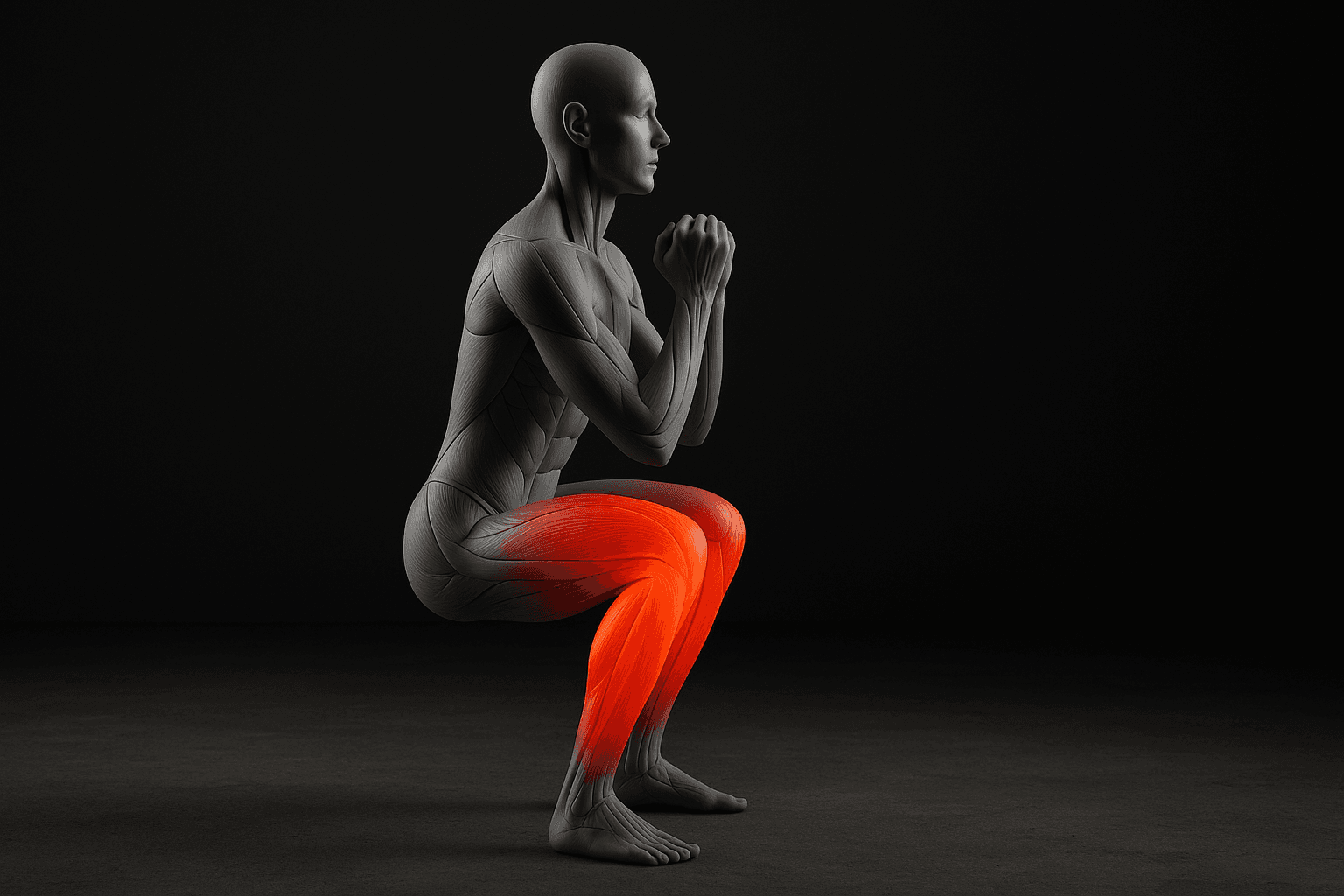
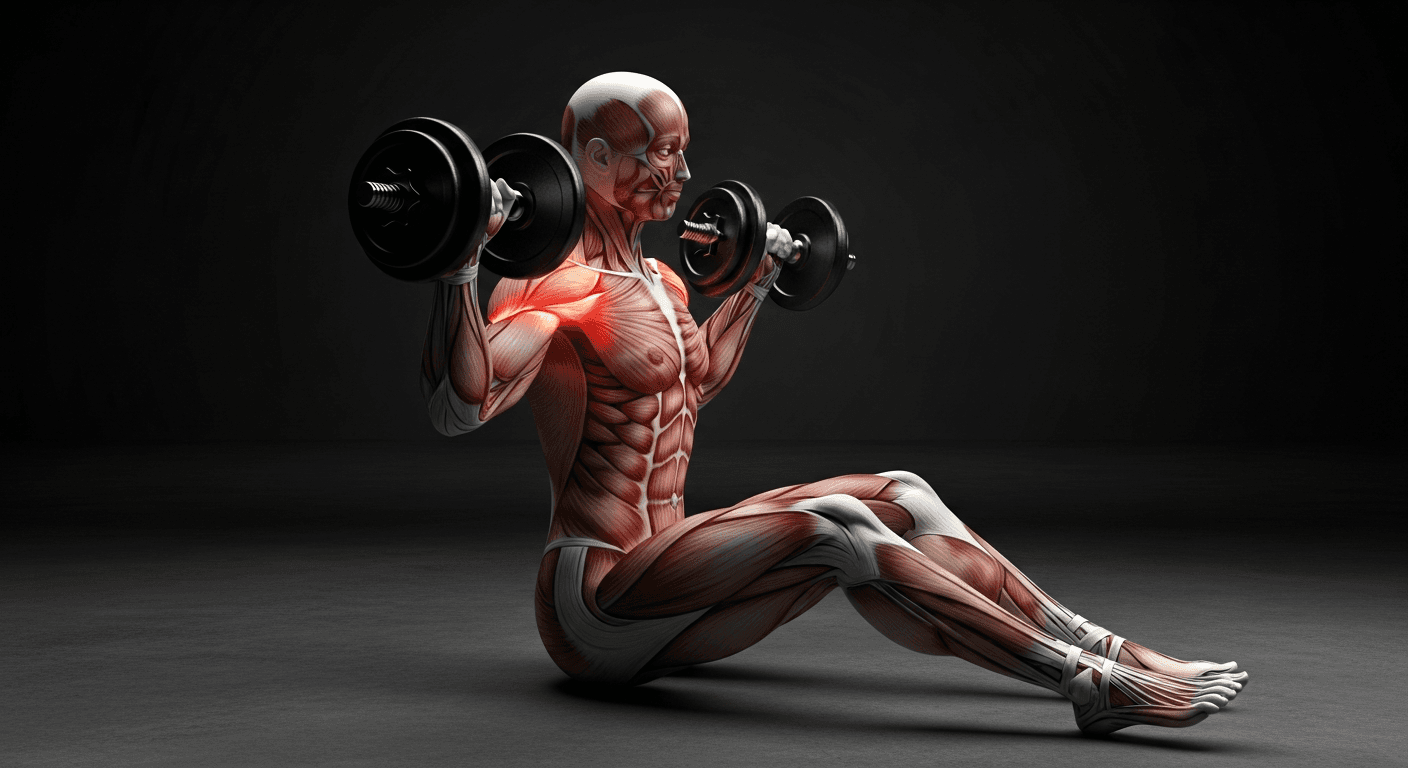
How to Warm Up for Heavy Squats
Clear, practical guidance for warming up before heavy squats: sequence, sets/reps, mobility and sample progressions to reach heavy loads safely and effectively.

Photo by RepBro.
For heavy squats, do 10–20 minutes total: brief aerobic pulse, joint mobility and activation, then 3–6 progressive bar-to-working-weight warm-up sets that decrease reps as weight rises (e.g., empty bar 10–20, light sets 5–8, medium 3–5, one or two near-working singles). Stop on sharp pain.
Why warm up for heavy squats?
A purposeful warm-up raises core and muscle temperature, primes the nervous system for maximal force, and rehearses the exact movement pattern. Warming up reduces stiffness and helps you find the desired depth, bracing, and bar path before heavy sets. The goal is readiness, not fatigue.
How long should my warm-up be?
Aim for roughly 10–20 minutes total. Less experienced lifters and those lifting multiple heavy sets may need closer to 20 minutes; experienced lifters often get ready in 10–15. If you arrive cold (long commute or lots of sitting) add 5–10 minutes. The warm-up should elevate heart rate slightly without causing substantial fatigue.
What sequence should I follow?
Follow a general-to-specific sequence:
- General aerobic pulse (3–7 minutes): easy cycling, rower, or brisk walking to increase blood flow.
- Joint mobility (2–5 minutes): ankle, hip, and thoracic mobility drills to enable squat mechanics. Keep each drill short (30–60 seconds).
- Activation (2–5 minutes): simple, low-rep drills that target the posterior chain—glute bridges, bird dogs, or banded lateral walks for 5–12 reps or 10–20 m.
- Movement rehearsal and ramp sets (5–10 minutes): perform progressive unloaded-to-loaded squat sets on the bar, reducing reps as weight increases until you reach working weight.
This order prepares tissues and motor patterns with minimal fatigue.
How should I structure ramp sets and reps?
Use 3–6 ramp sets that increase weight and lower reps as you go. A practical progression example:
- Empty bar x10–20 reps (movement pattern, tempo, groove)
- Light load x5–8 reps (50–60% of your working set feel)
- Moderate load x3–5 reps (60–80% feel)
- Heavier set(s) x1–3 reps approaching working weight
Adjust the number of ramp sets to the heaviness of the session: more sets for very heavy singles or low-rep max attempts; fewer sets for moderate working weights. Keep rest between warm-up sets short (60–120 seconds) but longer as you approach heavy loads.
Should I use percentages for warm-up sets?
Percentages can be useful for precision, but exact numbers are not mandatory. The practical rule is to add weight in sensible increments so that you get repeats at a submaximal intensity before hitting your scheduled working set. The last warm-up set should feel heavy but leave you one clean rep in reserve for your first work set.
What mobility and activation drills are worth doing?
Choose specific drills that address your squat restrictions:
- Ankles: wall-toe raises or ankle mobilizations, 10–12 reps each side
- Hips: dynamic lunges or leg swings, 8–10 per side
- Thoracic: banded pull-aparts or foam-roll thoracic extensions, 30–60 seconds
- Glutes: glute bridges or hip thrusts, 8–12 reps
- Lateral stability: banded side steps, 10–20 m
Keep the work light and purposeful. Avoid long, fatiguing circuits before heavy squats.
How many warm-up reps and sets are too many?
If your ramp produces substantial muscle burning or you need long rests before the first working set, you’ve likely overdone it. The warm-up should leave you ready to produce force, not exhausted. If you’re unsure, err on fewer ramp sets and slightly heavier early jumps, or reduce rep counts in accessory mobility drills.
When should I take longer to warm up?
Take a longer warm-up if:
- You’ve been sitting for hours or arrived cold
- You’re returning from a layoff or feeling stiff
- You plan a very heavy single or maximal attempt
Extend mobility and ramping steps, but keep each drill concise to avoid fatigue.
Comparison: short vs standard vs extended warm-up
| Approach | When to use | Typical sets | Time |
|---|---|---|---|
| Short ramp | Experienced lifter, submaximal session | 3 ramp sets (empty bar, light, work) | 8–12 min |
| Standard ramp | Most training days | 4–5 ramp sets + mobility | 10–18 min |
| Extended ramp | Max attempts, feeling stiff, return to heavy lifting | 5–8 ramp sets + extra mobility/activation | 18–30 min |
Use the approach that matches your training age, session intensity, and how you feel that day.
What about breathing and bracing during warm-up?
Practice the exact breathing and bracing pattern you’ll use for heavy sets. Take a full belly breath into the abdomen, brace the core, and hold that brace through the descent and ascent. Rehearse this from the earliest warm-up set so it becomes second nature under load.
Safety note
Stop immediately if you feel sharp or unusual pain and consult a qualified professional. This article does not diagnose conditions or promise injury prevention. If you’re rehabbing an injury or have medical concerns, follow guidance from a licensed clinician.
Limitations: what apps and AI can’t do for your squat warm-up
No app or AI can watch your live bar path, joint angles, or subtle compensations—only a trained coach or clinician can do that in person or via high-quality video review. Apps can guide structure and timing but cannot replace hands-on assessment for preexisting injuries or personalized corrective exercises. Also, plans only work if you show up consistently; recovery, sleep, nutrition, and long-term programming matter more than the specific app.
Practical final advice: keep warm-ups specific, efficient, and progressive. Prioritize movement quality and bracing over high rep, high-volume pre-fatigue. If you need individualized feedback on technique, seek a coach who can watch you lift.
Frequently asked questions
- How long should my squat warm-up take?
- A practical warm-up is 10–20 minutes total: 5–10 minutes of light aerobic work and mobility/activation, then 5–10 minutes of specific ramp sets on the bar. Shorter or longer sessions are reasonable depending on training age and planned load.
- How many warm-up sets do I need before heavy triples or singles?
- Use 3–6 progressive warm-up sets that lower reps as weight increases: start with an empty bar set of 10–20, then 2–4 sets of 5–8, 3–5, and 1–3 reps as you approach working weight, finishing with a couple of near-working singles if you plan heavier singles.
- Should I do mobility and activation before squatting heavy?
- Yes. Five to ten minutes of joint mobility and brief activation (glute bridges, band walks, ankle dorsiflexion drills) helps movement quality. Keep drills specific and short—30–60 seconds per mobility drill, 5–12 reps for activation movements.