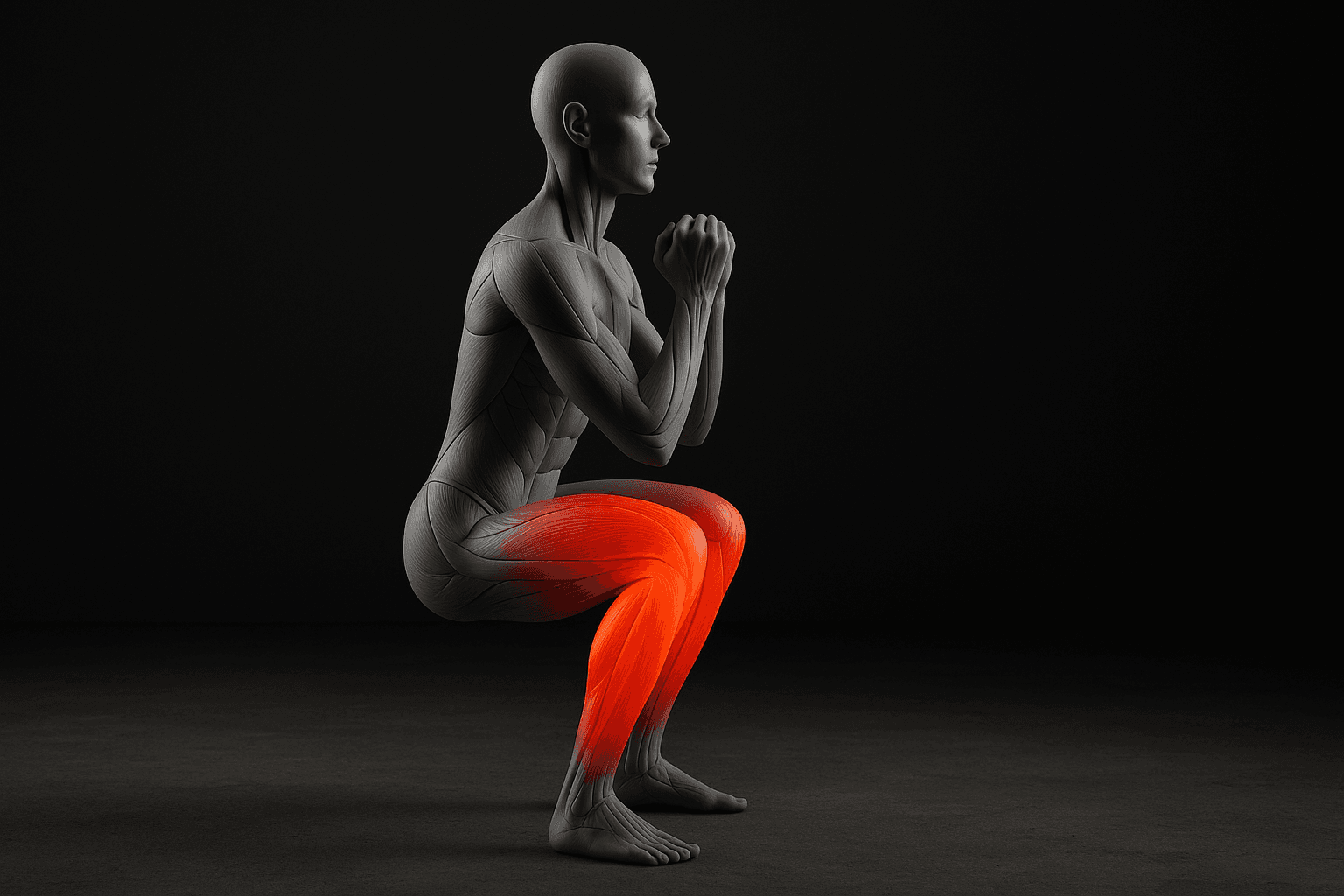
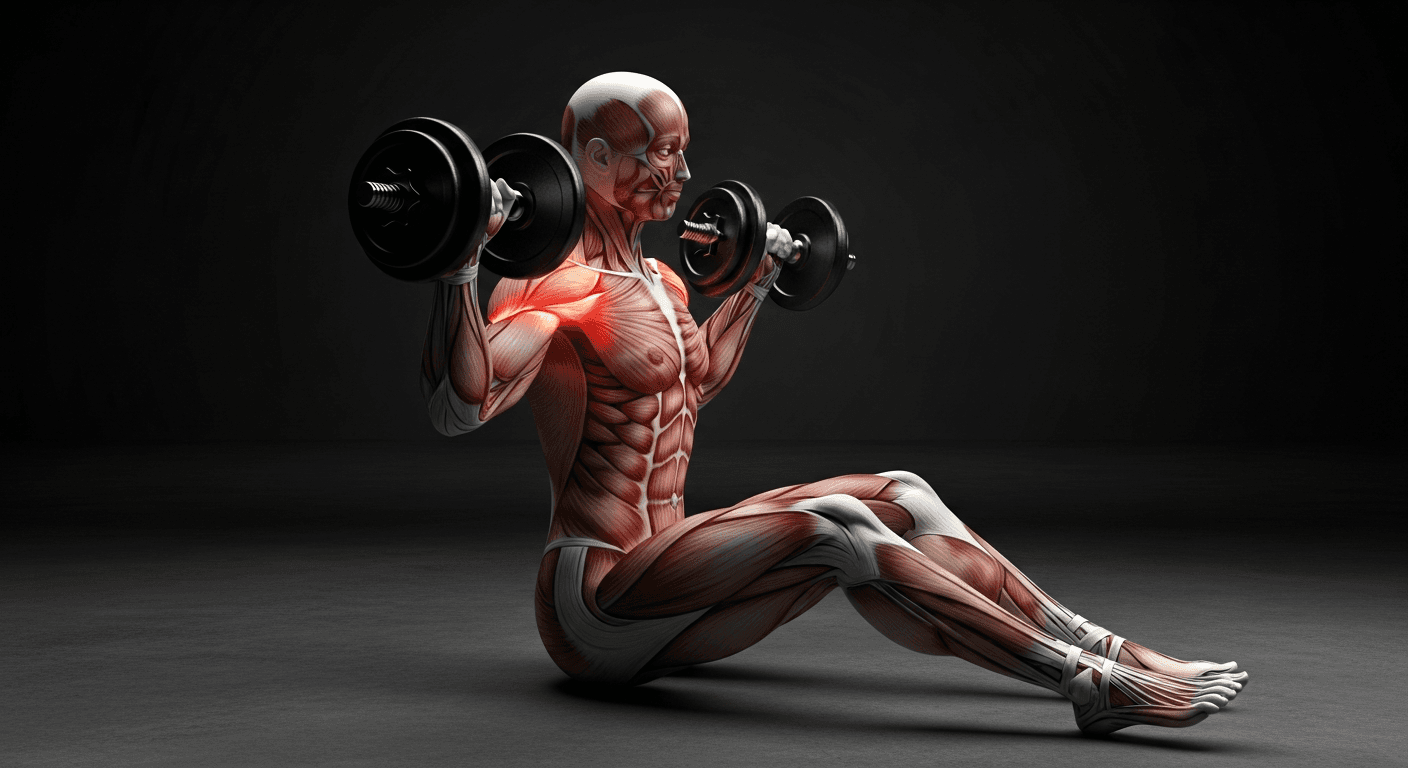
What Actually Happens When You Keep Skipping Leg Day
Skip leg day long enough and you lose strength, size and function in your lower body. Practical timelines, numbers, and a simple maintenance plan to fix it.

Photo by RepBro.
What happens when you keep skipping leg day?
If you repeatedly skip leg day, your lower-body strength and muscle size will fall behind your upper body, your total calorie burn from training drops, and you increase the chance of movement imbalances that raise injury risk and reduce athletic performance. Noticeable functional decline usually appears after 2–8 weeks, and measurable muscle loss and imbalances build over months.
How fast do legs lose strength and size?
- Short-term (1–2 weeks): Minimal muscle-size loss, but neural adaptations begin to reverse. You might feel weaker on heavy lifts because coordination and motor drive drop first.
- Medium-term (2–6 weeks): Expect a 5–15% drop in maximal strength on complex lifts if you stop heavy leg training. Muscle cross-sectional area typically shows small but measurable declines—roughly 3–8%—in the first month of complete inactivity, depending on training history.
- Long-term (2–6+ months): Continued neglect produces larger muscle loss, reduced tendon stiffness and possible reductions in bone-loading stimulus. Functional tasks (stair climbing, sprinting, carrying) get harder.
Numbers vary by training age: well-trained lifters keep more strength than novices during short breaks, but they also lose neural readiness faster when they stop specific heavy work.
What specifically changes in the body?
- Strength and coordination: Neural drive and intermuscular coordination degrade first. That’s why you often "feel" weaker before your muscles shrink.
- Muscle size: Hypertrophy needs stimulus. Without it, protein balance shifts toward breakdown and muscle cross-sectional area drops over weeks to months.
- Metabolic rate and calorie burn: Legs are the largest muscle group. A heavy leg session burns roughly 300–800 kcal depending on intensity, duration and your body size. Skipping these sessions reduces total weekly energy expenditure.
- Movement quality and risk: Imbalanced development (very strong quads vs weak glutes/hamstrings) increases strain on knees and hips, elevating risk for overuse injuries.
- Performance: Sprinting, jumping, cycling and carrying tasks suffer without consistent lower-body strength work.
How much leg training do you need to avoid the downsides?
If your goal is maintenance (not growth), practical targets are:
- Frequency: 2 sessions per week for legs.
- Volume: 6–12 working sets per major muscle group (quads, hamstrings, glutes) per week. For growth, push that to 10–20 sets/week.
- Intensity: Include at least one heavier day (4–6 reps) or moderate-heavy sets (6–12 reps) alongside higher-rep accessory work for balance.
Maintenance often requires roughly 50–70% of the volume that produced the gains in the first place. So if you previously built leg size on 12 sets/week, keeping 6–8 quality sets/week will largely preserve it.
What to do if you’ve already been skipping leg day
- Reintroduce a minimum effective dose: Start with 2 sessions/week and 12–15 total weekly working sets spread across compound and single-leg movements.
- Prioritize compound lifts: Squats (back or front), deadlifts/hinge variations and split squats give the best return per set.
- Load and progress: Add 1–2 sets per session or increase load by ~2–5% every 1–2 weeks if recovery and form allow.
- Address imbalances: Add 2–4 sets of hamstring/glute-focused work (RDLs, hip thrusts, Nordic curls) if quads are dominant.
Example 1-week, 2-session maintenance template:
- Session A (strength focus): Barbell back squat 3×4–6, Romanian deadlift 3×6–8, walking lunges 2×8 each leg, calf raises 2×12–15.
- Session B (hypertrophy/accessory): Bulgarian split squat 3×8–10 each leg, hip thrust 3×8–12, leg curl 3×10–15, step-ups 2×10 each leg.
This delivers ~12–16 working sets per week across the major lower-body muscles.
What if I’m short on time—can I skip the barbell?
Partial sessions work. Single-leg moves (split squats, single-leg RDLs), kettlebell swings, and stair or hill sprints provide meaningful stimulus. Aim for at least 6 hard sets per week per leg muscle as an absolute minimum to avoid rapid decline.
Safety note (exercise form)
Stop and reassess if you feel sharp or radiating pain during any exercise. Use controlled ranges of motion and correct technique; regress to lighter or unilateral movements if stability is an issue. Consult a qualified professional for persistent pain or complex injuries—this article isn’t a diagnosis.
Social and aesthetic effects
Skipping leg day isn't just functional. Socially and visually, many people notice disproportion when upper-body mass outpaces legs. For balanced physique and practical strength, consistent lower-body work is low-effort insurance.
Does skipping leg day wreck your hormones or metabolism forever?
Short-term effects on resting metabolic rate are modest. You won’t “ruin” your hormones by missing a few workouts, but chronically lower training volume and lower muscle mass reduce daily caloric needs. Training legs contributes more to weekly caloric expenditure than many realize because of the size of the muscles involved.
Want to build a balanced plan without overcomplicating things?
If you use an app to track and import training plans, tools like RepBro make it easy to set a 2×/week leg block and track progress. For comparison of training tools and plan formats, look at how different apps stack up here: https://www.repbro.app/vs and download RepBro here: https://apps.apple.com/us/app/gym-workout-coach-repbro/id6763749305.
One-sentence takeaway: Keep training your legs at least twice a week with 6–12 quality sets per major muscle to maintain strength, function and balance without wasting time.
Frequently asked questions
- Will skipping leg day make me look top-heavy?
- Yes—if you consistently skip lower-body training, your upper-body can outpace your legs. Expect noticeable imbalance in 2–3 months of biased training, especially if you keep progressing upper-body lifts.
- How often should I train legs to maintain strength and size?
- Aim for 2 sessions per week with 6–12 working sets per major muscle group (quads, hamstrings, glutes) per week. For maintenance, ~50–70% of your growth volume is usually enough.
- Can cardio or running replace leg strength work?
- No. Cardio maintains aerobic fitness and burns calories but doesn't provide the progressive overload needed to preserve or build maximal leg strength and muscle size.